Most injectable treatment changes shape. This one changes quality. Rather than placing volume to alter contour, hyaluronic acid is distributed in small amounts throughout the skin itself to improve hydration, elasticity, and the way light falls across the surface. Patients describe the result as looking well rather than looking different.
Sam Assassa, MD is an affiliate member of the American Academy of Cosmetic Surgery and presented on Volumetric Facial Rejuvenation at the International Academy of Cosmetic Surgery congress. He founded Beverly Hills Aesthetics in 1995, is board certified in Internal Medicine, and has performed more than 25,000 aesthetic procedures.
“Skin boosters are for the patient who does not want to look different. They want to look like they slept, and they want it to still be true in three months.” — Sam Assassa, MD
Why Skin Loses Hydration and Firmness
From roughly the twenties onward, the fibroblasts in the skin gradually reduce their production of the three things that keep it firm and hydrated: collagen, elastin, and hyaluronic acid.
The consequences show up separately. Less collagen means less structural support and more laxity. Less elastin means the skin recoils more slowly. Less hyaluronic acid means less water held in the tissue, which is what produces the dullness, fine crepiness, and loss of light reflectivity that patients describe as their skin looking tired.
Skin boosters address the third of those directly, and the microinjection process itself stimulates some response in the first two.
How Skin Booster Treatment Works
Small amounts of hyaluronic acid are placed through numerous micro injections distributed across the treatment area, rather than deposited in one place to create volume. The product integrates into the skin and binds water, improving hydration from within the tissue rather than from a topical applied on top of it.
Treatment is a course rather than a single appointment. The standard protocol is three sessions spaced two to four weeks apart, after which results are maintained with periodic treatment.
Please note: confirm with the practice which product is being used and under what indication. Hyaluronic acid products carry FDA approval for specific uses, and skin quality and hydration treatment by microinjection is generally an off label application in the United States. Off label use of an approved product is legal and standard in aesthetic practice, and it is discussed at consultation.
TREATMENT AREAS
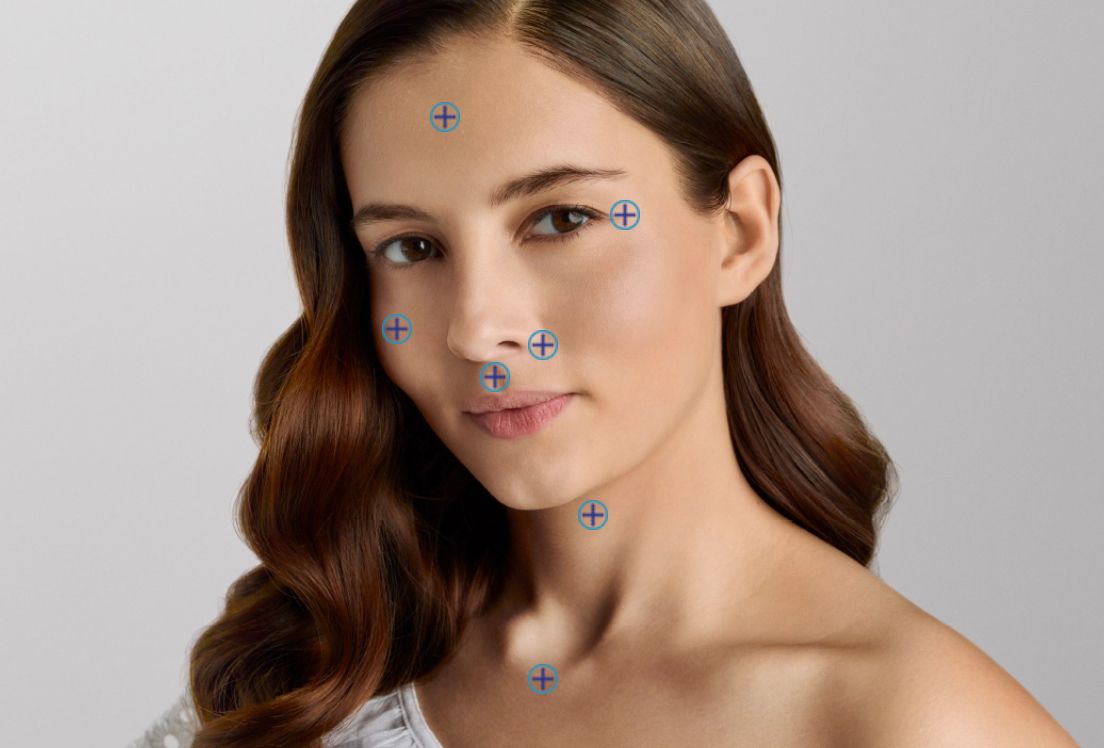
Treatment areas: Restylane Skinboosters can be used on the skin of your face, neck, décolletage and hands.
What Skin Boosters Treat
- Skin Hydration: Improving moisture retention within the tissue rather than on the surface.
- Fine Crepiness: Softening the fine surface texture that appears as skin thins.
- Radiance: Improving how light reflects off the skin, which is what reads as looking rested.
- Firmness And Elasticity: Gradual improvement in skin quality across the treatment course.
- Difficult Areas: The neck, décolleté, and backs of the hands, where skin thins early and conventional filler is not appropriate.
What to Expect From Treatment
Each session takes a short appointment. Topical numbing is applied, and the injections are superficial and numerous rather than deep and few.
Downtime is minimal and most patients return straight to work. You may see small raised points at the injection sites which settle within hours to a day.
Results develop gradually across the three session course rather than appearing at the first appointment, which suits the nature of the treatment. Improvement continues after the course completes, and maintenance treatment preserves it.
Restylane Skin Booster Risks and Safety
Reactions after treatment may include slight redness, swelling, itching, bruising, pain, and tenderness at the injection sites. These are generally mild to moderate and typically resolve on their own within one or two days.
Less commonly, small nodules or lumps can form at injection points, usually resolving as the product integrates. As with any injectable, infection at the injection site is possible, and rarely, hyaluronic acid injected into or compressing a blood vessel can restrict blood flow, though the superficial placement and small volumes used here make this less likely than with structural filler.
Patients with a history of hypersensitivity to hyaluronic acid products, active infection or inflammation in the treatment area, or a history of keloid scarring should discuss this before treatment.
Individual results vary and no outcome can be guaranteed.
Frequently Asked Questions About Restylane Skin Boosters
How are skin boosters different from dermal filler?
The product is related and the purpose is not. Dermal filler is placed in specific locations in larger amounts to create volume and change contour, restoring a cheek or defining a jaw. Skin boosters distribute small amounts throughout the skin to improve its quality, hydration, and texture without changing shape. A patient wanting fuller cheeks needs filler. A patient whose face is the right shape but whose skin looks tired needs this.
How many skin booster treatments do I need?
The standard course is three sessions spaced two to four weeks apart, which is how the treatment is designed to work rather than an upsell. Results build across the course and continue developing afterward. Maintenance treatment periodically thereafter preserves the effect, with the interval depending on your skin and how it responds. A single session will not deliver what the course does.
Do skin boosters hurt?
Topical numbing is applied beforehand and the injections are superficial, so most patients find the treatment tolerable. There are many injection points rather than a few, so the sensation is repetitive rather than intense, and areas like the neck tend to be more sensitive than the face. The appointment is short and discomfort settles quickly afterward.
Can skin boosters be used on the neck and hands?
Yes, and those are among the most useful areas for this treatment. Skin on the neck, décolleté, and backs of the hands thins early and shows crepiness before the face does, and conventional filler is generally not appropriate there. Because skin boosters improve tissue quality rather than adding volume, they suit those areas well, which is why patients often treat them alongside the face.
How long do skin booster results last?
The effect builds across the treatment course and is typically maintained with periodic sessions rather than being permanent, since the hyaluronic acid is gradually metabolized and the underlying decline in the skin’s own production continues. Most patients return for maintenance at intervals set by how their skin responds. Improvement in skin quality tends to hold better in patients who protect their skin from sun.
Will skin boosters make my face look fuller?
No, and that is the point of them. The volumes used are small and distributed throughout the skin rather than deposited to create contour, so there is no shape change. This is the treatment for patients who do not want to look altered and are unhappy with their skin quality rather than their facial proportions. If you do want volume restored, that is a different treatment and a different conversation.
Why Patients Choose Beverly Hills Aesthetics for Skin Boosters
- Physician Performed: Dr. Assassa places every treatment himself.
- Quality Over Volume: Recommended for skin texture rather than sold as a substitute for filler.
- Full Course Planning: The three session protocol explained upfront rather than sold one at a time.
- Difficult Areas Treated: Neck, décolleté, and hands addressed alongside the face.
- Three Decades Of Injectable Practice: Technique built on experience since 1995.
Schedule a Skin Booster Consultation in Beverly Hills
If the shape of your face is fine and the problem is that your skin looks tired, dull, or finely crepey, skin boosters address that specifically. Dr. Assassa will assess your skin quality and tell you whether this treatment or a different one fits what is actually bothering you. Beverly Hills Aesthetics serves patients from Beverly Hills, Los Angeles, West Hollywood, and Century City. Request a consultation or schedule your appointment online.