Some facial concerns are volume problems and some are skin problems, and the treatments are not interchangeable. A patient whose cheeks have deflated needs volume restored. A patient whose skin has thinned, creped, and lost its evenness needs the skin itself improved, and filling underneath it will not do that. Nanofat addresses the second category using your own tissue.
Sam Assassa, MD is a member of the American Society of Liposuction Surgery and was among the first physicians on the West Coast to introduce Smart Liposculpt™ for the face and body, which is the harvesting expertise nanofat depends on. He founded Beverly Hills Aesthetics in 1995, is board certified in Internal Medicine, and has performed more than 25,000 aesthetic procedures.
“Nanofat is not a filler and it is not a facelift. It treats the quality of the skin. Patients who understand that going in are the ones who are pleased at six months.” — Sam Assassa, MD
What Nanofat Is and How It Differs From Fat Transfer
Conventional fat transfer harvests fat and reinjects it with the fat cells intact, which is what restores volume. Nanofat starts from the same harvest and then goes further, emulsifying and filtering the tissue until the intact fat cells are broken down and what remains is a thin liquid containing the cellular and structural components of the fat.
That processing is the whole point and it is also the limitation. Because the intact fat cells are gone, nanofat does not add meaningful volume, and it is not a substitute for a filler or a fat graft. What it is used for is skin quality, injected superficially into the dermis and just beneath it, where conventional fat and most fillers cannot safely be placed.
Many patients receive both in one session, with conventional fat restoring the structure and nanofat treating the surface above it.
What Nanofat Treats
- Skin Texture And Thinning: Improving fine lines and the crepey quality of skin that has thinned with age.
- Periorbital Skin: Treating the thin skin around the eyes, where most fillers cannot be placed superficially.
- Perioral Lines: Softening the fine vertical lines around the mouth.
- Scarring: Improving the appearance of acne scarring and other superficial irregularities.
- Skin Tone: Improving evenness and discoloration in the treated area.
The Nanofat Procedure
A small amount of fat is harvested under local anesthesia, most often from the abdomen or inner thigh, using the same technique employed in liposuction but on a much smaller scale. Because nanofat requires so little tissue, most patients have enough to harvest even when they are naturally thin. The harvested fat is then processed and injected superficially into the areas being treated.
The procedure is performed in the office in a single visit. It is minimally invasive rather than non-surgical, since fat is harvested through a small access point, and that distinction affects recovery and consent.
Who Is a Candidate for Nanofat Grafting
Suitable candidates are in general good health, are non-smokers or willing to abstain before and after the procedure, and have a concern that is genuinely about skin quality rather than volume. Dr. Assassa examines potential harvest areas at consultation to confirm there is sufficient tissue, which is rarely a limiting factor given how little is needed.
Patients whose main concern is deflation, hollowing, or lost facial structure are better served by conventional fat transfer or dermal filler, and will be told so.
What to Expect After Nanofat Treatment
Expect bruising and swelling at both the donor site and the treated area, typically settling over several days. There is a small scar at the harvest site, and no incision at the injection sites.
Results develop gradually rather than immediately, since the mechanism is a change in skin quality rather than an addition of volume. Published work has documented improvement in skin quality at six months after treatment. Some of the grafted material is metabolized by the body, and how much persists varies between patients.
Nanofat Risks and Safety
Nanofat is autologous, meaning it comes from your own body, which substantially reduces the likelihood of an allergic or rejection response compared with synthetic material. It does not eliminate risk, and any page claiming it does is overselling.
Expected effects include bruising, swelling, and tenderness at both the donor and treatment sites. Risks include infection, contour irregularity or lumpiness at the harvest site, prolonged swelling, and variable or asymmetric results requiring a second session. Superficial injection carries a risk of visible irregularity if placed unevenly.
The regenerative properties attributed to nanofat, including its effect on collagen production and skin cell activity, are an active area of research rather than a settled mechanism. Individual results vary and no outcome can be guaranteed.
The Process Nanofat Facelift
Procedure
30 Minutes
Price
$1500-$2000
Treatment
1 Hour
Downtime
Varies: Bruising & Swelling 3-7 days
Results
Immediate
Duration
Varies 1-2 years
Frequently Asked Questions About Nanofat
Is nanofat the same as a fat transfer?
They start the same way and end differently. Both harvest fat from your body, but conventional fat transfer reinjects it with the fat cells intact to restore volume, while nanofat processes the tissue until those cells are broken down. What remains is used for skin quality rather than volume. If your concern is hollowing or lost structure, fat transfer is the relevant procedure. If it is texture, fine lines, or thinning skin, nanofat is.
Will nanofat lift my face?
No, and this is the most important expectation to set. Nanofat does not add meaningful volume, so it cannot lift or restructure the face the way filler, fat transfer, or surgery can. What it does is improve the quality of the skin itself. Patients wanting a lift need a different procedure, often alongside nanofat rather than instead of it, and many treatments combine the two in one session.
How long do nanofat results last?
Results develop over months rather than appearing immediately, and published work has documented skin quality improvement at six months. Longevity beyond that varies considerably between patients, and some of the grafted material is metabolized. Because the effect is on skin quality rather than a volume that either persists or does not, the honest answer is that it is less predictable than the durability of a conventional fat graft, and periodic retreatment is common.
Is nanofat a stem cell treatment?
Nanofat contains the cellular components of your own fat tissue, and research into their regenerative properties is ongoing and genuinely interesting. It is not, and should not be presented as, an approved stem cell therapy. The treatment offered here is the injection of your own processed fat to improve skin quality, and that is what it is being recommended for.
Does nanofat leave scars?
There is a small scar at the donor site where the fat is harvested, which is typically minor and placed where it is not conspicuous. There is no incision at the injection sites, since the processed fat is delivered through a needle or cannula. Any procedure involving an access point creates some scarring, and any page promising none is not being straight with you.
How much does nanofat cost in Beverly Hills?
Cost depends on how many areas are being treated and whether conventional fat transfer is being performed in the same session, which many patients elect. Pricing is confirmed at consultation and current figures are published on the fees page. Cosmetic treatment is generally not covered by insurance and several payment options are available.
BEFORE & AFTER
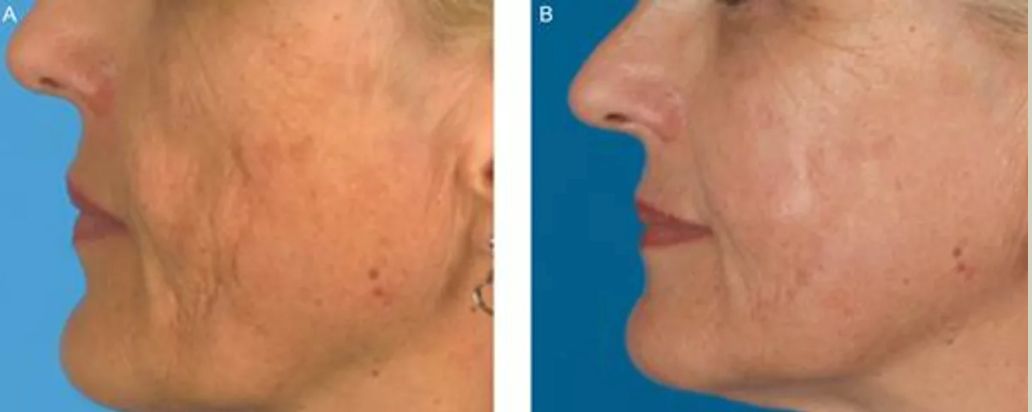
Why Patients Choose Beverly Hills Aesthetics for Nanofat
- Harvesting Expertise: Fat harvesting technique built on three decades of liposuction practice.
- Physician Performed: Dr. Assassa harvests, processes, and injects himself.
- Honest Positioning: Nanofat recommended for skin quality, not sold as a facelift.
- Combination Planning: Conventional fat and nanofat used together where structure and surface both need work.
- Autologous Material: Your own tissue rather than synthetic product.
Schedule a Nanofat Consultation in Beverly Hills
If your concern is skin that has thinned, creped, or lost its evenness rather than a face that has deflated, nanofat is worth discussing. Dr. Assassa will assess whether your concern is genuinely a skin quality issue or a volume issue, since the two need different treatments and are frequently confused. Beverly Hills Aesthetics serves patients from Beverly Hills, Los Angeles, West Hollywood, and Century City. Request a consultation or schedule your appointment online.