The chin anchors the lower third of the face the way the cheekbones anchor the middle, and a chin that sits too far back changes far more than the chin. It shortens the apparent length of the face, makes the nose read as larger by comparison, blurs the line between jaw and neck, and can make a normal amount of submental fullness look like a double chin. Patients frequently arrive asking about their nose or their neck, and the assessment points to the chin.
Sam Assassa, MD has performed more than 25,000 aesthetic procedures since founding Beverly Hills Aesthetics in 1995 and is an affiliate member of the American Academy of Cosmetic Surgery. He is board certified in Internal Medicine and has taught injectable technique to physicians across three continents.

“Patients come in convinced the problem is their nose. Sometimes it is. Very often the nose is fine and the chin is two millimeters short, and the profile has been telling them the wrong story for years.” — Sam Assassa, MD
What Determines Chin Shape and Projection
Three separate measurements decide how a chin reads, and treatment depends on which is off.
Projection. How far the chin extends forward in profile. A chin that sits behind the ideal line, sometimes called a recessed or weak chin, is the most common concern and the one that responds best to filler.
Width. Wider chins are generally read as more masculine and narrower chins as more feminine. Filler can narrow the apparent width of a broad, flat chin by adding central projection, or broaden a narrow one, depending on where product is placed.
Height. The vertical length of the chin is skeletal and is the hardest of the three to change without surgery. A chin that is short in height makes the whole face look rounder or squarer than it is.
Chin Filler for Projection and Balance
Dermal filler is placed at the chin point and along the surrounding structure using a blunt cannula, which reduces bruising and lowers the risk of entering a vessel compared with a needle in this region. The goal is projection that brings the profile into proportion with the nose and lips rather than a chin that draws attention on its own.
Dense structural fillers are used here, since this is load-bearing work rather than surface refinement. Results are visible immediately and generally last one to two years, since the chin moves comparatively little.
When an Overactive Mentalis Muscle Limits Chin Projection
This is the part most pages leave out and it explains a specific failure. The mentalis is the muscle at the point of the chin, and in some patients it is overactive, producing a dimpled or pebbled chin surface and pulling the soft tissue backward and upward. Where that is happening, adding filler alone will not produce the projection expected, because the muscle is working against it.
Relaxing the mentalis with a small, precisely placed neuromodulator dose releases that tension, after which filler achieves what it could not before. Placement matters considerably here, because product spreading too widely can affect the muscles controlling the lower lip and alter the smile temporarily.
Please note: treatment of the mentalis for chin contouring is an off label application. These products carry FDA approval for indications that do not include chin shaping. Off label use is legal and standard in aesthetic practice and it is discussed at your consultation.
Fat Transfer for Chin Augmentation
Fat harvested from elsewhere on the body can be used instead of filler, and a portion of the graft establishes a blood supply and persists long term. Retention is partial and varies between patients, so a second session is sometimes required to reach the intended result.
Fat suits patients wanting durable correction who have already confirmed, usually with filler, that they like the change. That sequencing is worth stating plainly. Filler is reversible, which makes it an excellent way to see a stronger chin on your own face before committing to anything longer lasting.
When Chin Enhancement Requires Surgery
Non-surgical treatment handles mild to moderate recession well. Beyond that range it stops being the right tool.
Patients with significant chin recession, a chin that is markedly short in vertical height, or an underlying bite discrepancy are better served by a chin implant, a sliding genioplasty, or in some cases orthognathic surgery that repositions the jaw. Filler placed on a chin that needs skeletal repositioning produces a modest improvement on a structural problem, and if that is your anatomy you should hear it at consultation rather than after three rounds of treatment.
STANDARDS OF A BEAUTIFUL JAW LINE

4mm. 2mm. Nasomental Line.
- Chin is located in 3 mm within the line that is perpendicular to horizontal line drawn between the eyes.
- When a straight ruler is placed on nose tip and chin point, lower lip barely touches the ruler.
- When seen in profile, lips slightly cross the line drawn from philtrum to the chin point.
- The shape of chin forms a gentle ‘S’ curve from lips to chin.
- Upper, middle, and lower parts of face are in 1:1:1 ratio.
What to Expect From Chin Filler in Beverly Hills
Treatment takes roughly thirty minutes. Results are visible immediately, with the final contour settling at about two weeks. Swelling and bruising are common rather than rare, typically resolving over one to three days, and cannula technique reduces but does not eliminate them.
Most patients return to normal activity the same day.
Chin Filler Risks and Safety
Common effects include swelling, bruising, tenderness, and temporary firmness while product settles. Asymmetry can occur and is usually correctable at follow up.
Where a neuromodulator is used on the mentalis, imprecise placement can temporarily affect the muscles controlling the lower lip, altering the smile or producing difficulty with certain sounds. This resolves as the effect wears off and is the reason for conservative dosing in this specific muscle.
Rarely, filler injected into or compressing a blood vessel can restrict blood flow and damage tissue. Individual results vary and no outcome can be guaranteed.
Frequently Asked Questions About Chin Filler
How much chin filler do I need?
Usually more than patients expect, because this is structural work rather than a small refinement, and a chin that is visibly recessed often needs a meaningful volume to reach proportion. Treating it with a single syringe frequently produces a change nobody notices. Dr. Assassa will tell you at consultation what your profile actually requires, and if the honest number is more than you want to spend, you will hear that rather than be sold a partial result.
Can chin filler fix a double chin?
Indirectly and only sometimes. A recessed chin blurs the angle between the jaw and the neck, so a normal amount of submental fullness reads as a double chin when it would not on a more projected profile. Improving chin projection sharpens that angle and the fullness becomes less apparent. If the underlying issue is genuinely fat beneath the chin, filler will not remove it, and laser assisted lipolysis is the treatment that does.
Is chin filler better than a chin implant?
They suit different degrees of the same problem. Filler is reversible, requires no anesthesia, and produces results immediately, which makes it ideal for mild to moderate recession and for testing whether you like a stronger chin before committing. A chin implant is permanent, produces a larger and more precisely controlled change, and is the better answer for significant recession or short vertical height. Many patients use filler first specifically to decide.
Why does my chin look dimpled or pebbled?
That texture, sometimes described as an orange peel or cobblestone chin, comes from an overactive mentalis muscle rather than from the skin. Relaxing that muscle with a small neuromodulator dose smooths the surface, and it often improves projection at the same time by releasing tension that was pulling the soft tissue backward. This is an off label use and is discussed at consultation.
How long does chin filler last?
Generally one to two years, which is at the longer end for facial filler, because the chin is a comparatively static region and dense structural products are used there. Fat transfer lasts considerably longer, with a portion of the graft persisting permanently, though retention is partial. Most patients maintaining with filler find later treatments need less product than the first.
How much does chin enhancement cost in Beverly Hills?
Cost depends on how much product your profile requires and whether mentalis treatment is being combined with it. Pricing is confirmed at consultation and current figures are published on the fees page. Cosmetic treatment is generally not covered by insurance and several payment options are available.
TYPES OF RECEDING CHINS:
- Chin Slightly Short in Length
Mild symptoms of the receding chin can be corrected with fat grafting, or filler injection on chin point without surgery. - Receding Jaw
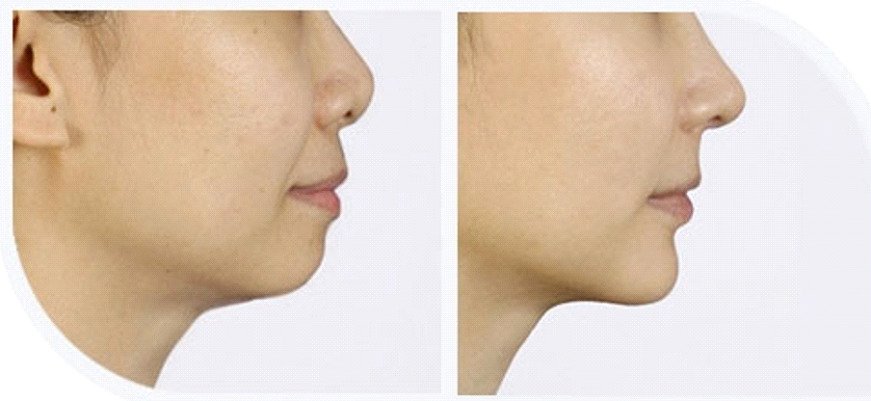
Chin point should be repositioned with surgery in this case combined with fat grafting.
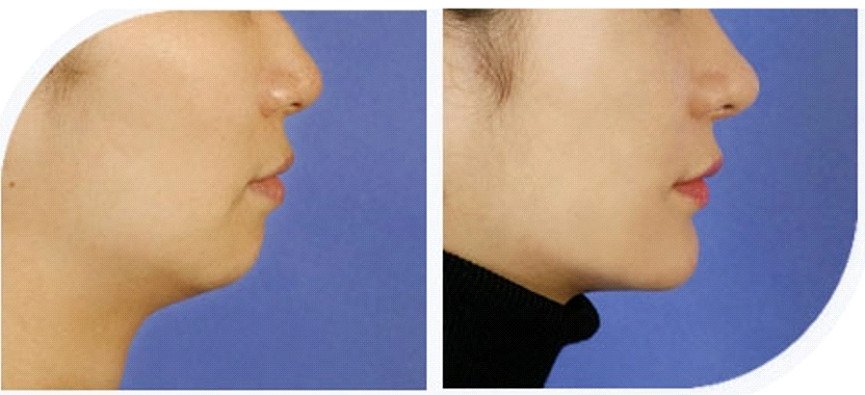
SEVERE CASE OF RECEDING CHIN
Since simple correction of chin point may not create natural appearance,the whole body of low jaw needs to be pulled out, or two jaw surgery is necessary.
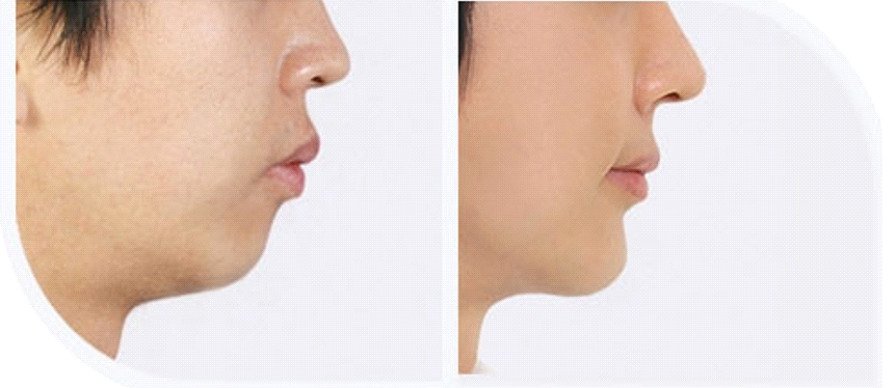
RECEDING CHIN CORRECTION BY DERMAL FILLERS
This procedure is performed by injecting dermal fillers (Perlane®, Juvederm® or Radiess®) through a blunt needle (cannula) to enhance the projection of the chin and improve facial balance without surgery. Rarely bruising and swelling occur.
Why Patients Choose Beverly Hills Aesthetics for Chin Contouring
- Profile Based Assessment: The chin evaluated against nose, lips, and jaw rather than in isolation.
- Cannula Technique: Blunt cannula placement to reduce bruising and vascular risk.
- Muscle And Volume Together: Mentalis activity assessed before filler is placed, not after it underperforms.
- Reversible First: Filler used to trial a change before any durable option is considered.
- Honest Candidacy Assessment: Patients needing an implant or jaw surgery are told so at consultation.
Schedule a Chin Enhancement Consultation in Beverly Hills
If your profile has always bothered you, or your jawline and neck blur together in photographs, the chin is worth assessing before anything else in the lower face. Dr. Assassa will evaluate your projection, width, and height and tell you what filler can accomplish and where surgery would serve you better. Beverly Hills Aesthetics serves patients from Beverly Hills, Los Angeles, West Hollywood, and Century City. Request a consultation or schedule your appointment online.
The Process Non-Surgical Chin Enhancement
Consult
30 Minutes
Price
$1200-$1500
Treatment
45 Minutes
Downtime
Varies: 1-2 days swelling or bruising
Results
Immediate
Duration
1-2 Years
BEFORE & AFTER
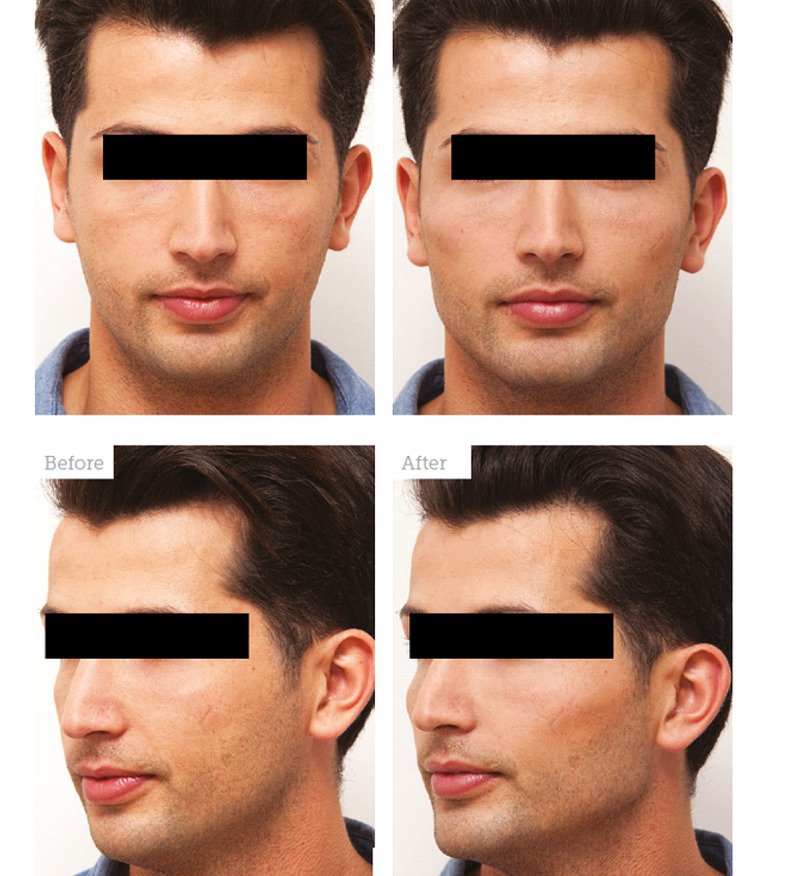
For more information or to find out the right option for you, call Beverly Hills Aesthetics at 424-284-8933 Or Request a Complimentary Consultation with Dr. Assassa. We look forward to meeting you.