The One Hour Natural Facelift Without Surgery
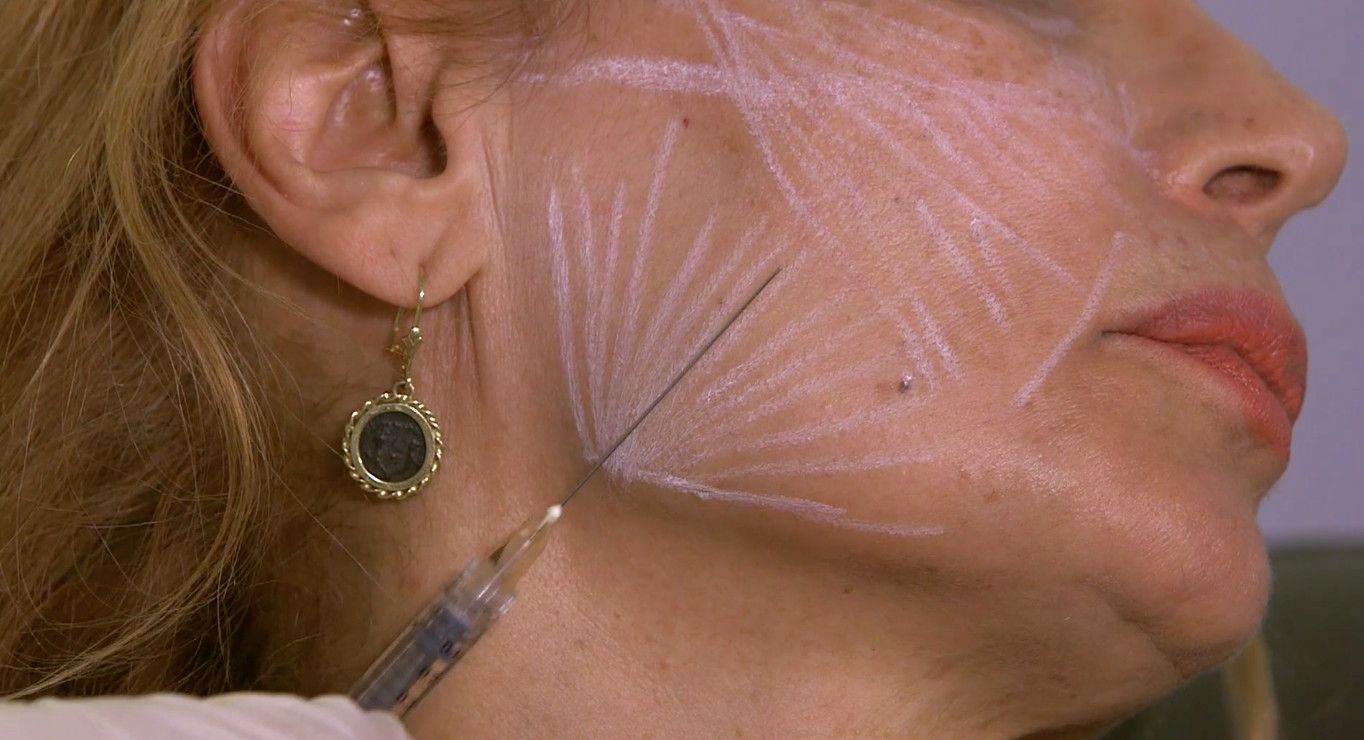
Sagging is a directional problem. Facial tissue does not simply deflate, it descends along predictable lines as the structures anchoring it weaken, and treatment that ignores those lines produces a fuller face rather than a lifted one. Vector lifting works from that principle, placing structural support at fixed points so the tissue is repositioned rather than merely filled.
Sam Assassa, MD presented on Volumetric Facial Rejuvenation, the principle underlying vector lifting, at the International Academy of Cosmetic Surgery congress. He founded Beverly Hills Aesthetics in 1995 and is board certified in Internal Medicine. Dr. Assassa is the Founder of the American Association of Aesthetic Medicine and Surgery, where he has served as President since 2006. He has directed hands-on training courses for physicians in more than 15 countries.
“Volume placed without direction makes a face bigger. Volume placed along the vectors the tissue fell down makes it look lifted. That is the entire difference, and it is not obvious until you have done a few thousand of them.” — Sam Assassa, MD
How 3D Vector Lifting Differs From a Surgical Facelift
A surgical facelift repositions tissue in two dimensions, lifting the skin and the underlying SMAS layer upward and outward, and it removes what is excess. It produces a larger and longer lasting change than any injectable approach, and it carries the risks, anesthesia, and recovery of an operation.
Vector lifting works in three dimensions instead of two. Rather than pulling tissue, a firm structural filler is placed at strategic anchoring points using a cannula, restoring support along the lines the tissue descended and counteracting that descent from underneath. Nothing is removed and nothing is pulled.
The trade-off is honest and worth stating. Vector lifting achieves less than surgery and requires about an hour with no anesthesia and minimal recovery. It suits mild to moderate laxity. It does not substitute for a facelift in a patient with significant excess skin, and if that is your anatomy you will be told so at consultation.
The Filler Used in Vector Lifting
Vector lifting uses a filler with high viscosity and high elasticity, most commonly Radiesse®, a calcium hydroxylapatite product. Those two properties are what make it suitable. Viscosity means it holds its position under the weight of the tissue above it rather than spreading, and elasticity means it supports and lifts rather than simply occupying space.
Placement is made with a specialized cannula at fixed points determined by where the individual face has descended, which is why this is a planning procedure as much as an injecting one.
Please note: calcium hydroxylapatite carries FDA approval for specific indications. Its use for full face vector lifting across multiple anchoring points is an off label application. Off label use of an approved product is legal and standard in aesthetic practice, and Dr. Assassa will explain what is being used and why at your consultation.
What a 3D Vector Facelift Can and Cannot Correct
It addresses mild to moderate descent of the midface and lower face, softening of the jawline, early jowling, deepening nasolabial folds where the cause is descent rather than volume alone, and general loss of facial definition.
It does not remove excess skin, correct significant laxity in the neck, or reposition tissue that has descended substantially. Adding structural volume beneath skin that has genuinely lost its elasticity enlarges the face rather than lifting it, which is the mechanism behind results that look overdone.
What to Expect From a 3D Vector Facelift in Beverly Hills
Treatment takes about an hour. Results are visible immediately, with swelling and occasional bruising over one to two days and the final contour settling at about two weeks. Most patients return to normal activity the same day.
Calcium hydroxylapatite typically lasts longer than hyaluronic acid filler, generally in the range of a year or more depending on placement and on the individual. Unlike hyaluronic acid, it cannot be dissolved, which is a meaningful consideration and a reason for conservative placement.
3D Vector Facelift Risks and Safety
Common effects include swelling, bruising, tenderness, and temporary firmness at the placement points. Nodules can occur with calcium hydroxylapatite, particularly with superficial placement, and asymmetry is possible and usually correctable at follow up.
The significant consideration specific to this product is that it is not reversible. Hyaluronic acid filler can be dissolved with hyaluronidase within a day or two if a result is unsatisfactory or a complication occurs. Calcium hydroxylapatite cannot, and correction relies on time or, in some cases, on other interventions. Cannula placement reduces the risk of entering a vessel compared with needle technique, but rarely, filler injected into or compressing a blood vessel can restrict blood flow and damage tissue.
Individual results vary and no outcome can be guaranteed.
Frequently Asked Questions About the 3D Vector Facelift
How long does a 3D vector facelift last?
Calcium hydroxylapatite generally lasts longer than hyaluronic acid filler, commonly a year or more, with the exact duration depending on placement depth, the amount used, and individual metabolism. Structural placements at deep anchoring points tend to outlast superficial refinements. Most patients return for assessment at around the one year mark rather than for a full retreatment, since some of the original placement is usually still providing support.
Is a 3D vector facelift as good as a surgical facelift?
No, and any honest answer says so plainly. A surgical facelift removes excess skin and repositions the underlying tissue layer, producing a larger and more durable change that injectables cannot approach. Vector lifting delivers a real improvement for mild to moderate laxity in about an hour with no anesthesia and no meaningful recovery. They serve different stages rather than competing, and which stage you are at is determined by examination.
Can the 3D vector filler be dissolved if I do not like it?
No, and this is the most important difference from hyaluronic acid treatment. Calcium hydroxylapatite has no reversing agent, so an unsatisfactory result cannot be undone the way a hyaluronic acid result can. It resolves gradually on its own over roughly a year. This is the main argument for conservative placement and for choosing an experienced injector, and it is also why some patients prefer to trial the effect with hyaluronic acid filler first.
Does a 3D vector facelift hurt?
Discomfort is modest. Topical numbing is applied first, the product used contains lidocaine, and placement is made with a blunt cannula rather than a needle, which most patients find more comfortable and which produces less bruising. The appointment runs about an hour and the injecting portion is a fraction of that.
Am I a candidate for a 3D vector facelift?
The best candidates have mild to moderate descent with reasonably good skin quality, typically ranging from the late thirties through the fifties, though the tissue matters more than the age. Patients with significant excess skin on the face or neck will get a modest result and should consider surgery. That assessment happens at consultation, and being told you are not a candidate is a better outcome than a treatment that cannot deliver what you came in for.
How much does a 3D vector facelift cost in Beverly Hills?
Cost depends on how much product a particular face requires, and full face vector lifting uses more than a single area treatment. Pricing is confirmed at consultation and current figures across procedures are published on the fees page. Cosmetic treatment is generally not covered by insurance and several payment options are available.
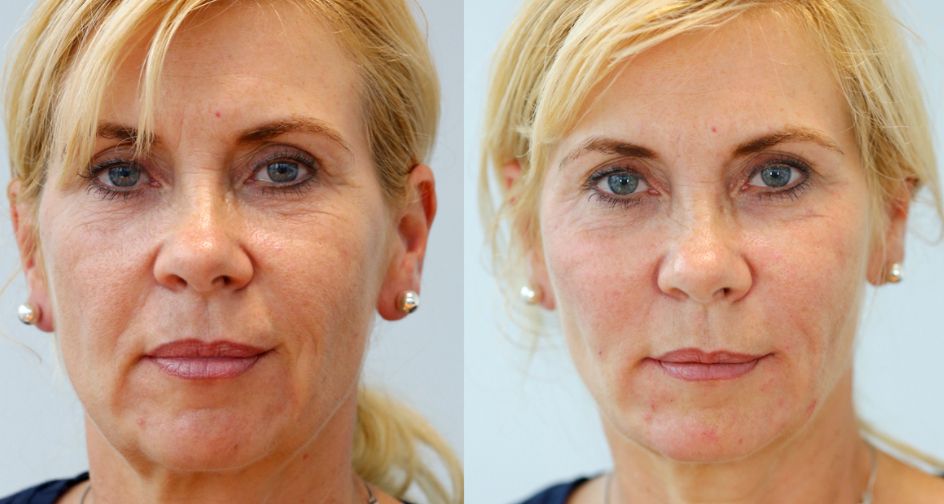
BEFORE & AFTER
Why Patients Choose Beverly Hills Aesthetics for Vector Lifting
- Directional Planning: Anchoring points determined by where your individual face has descended.
- Physician Performed: Dr. Assassa plans and places every vector treatment himself.
- Cannula Technique: Blunt cannula placement to reduce bruising and vascular risk.
- Conservative With Irreversible Product: Placement kept deliberate, since this filler cannot be dissolved.
- Honest Candidacy Assessment: Patients with significant laxity are told surgery will serve them better.
Schedule a 3D Vector Facelift Consultation in Beverly Hills
If your face has begun to descend rather than simply deflate, and you are not ready for surgery, vector lifting is worth assessing. Dr. Assassa will evaluate how far the tissue has moved and tell you honestly whether an injectable approach can deliver what you are after. Beverly Hills Aesthetics serves patients from Beverly Hills, Los Angeles, West Hollywood, and Century City. Request a consultation or schedule your appointment online.