
Non-Surgical Forehead Contouring
The forehead occupies the upper third of the face and sets the frame for everything below it, which is why a change there registers broadly rather than locally. Patients rarely arrive naming it. They say their face looks harder than it used to, or that photographs from certain angles look wrong, and the assessment finds a forehead that has flattened or a brow ridge that reads as heavier than the rest of the face.
Sam Assassa, MD serves on the advisory committee of the American Aesthetic Medicine Association and is a certified educator for the International Academy of Aesthetics, teaching injectable anatomy and technique to practicing physicians. He founded Beverly Hills Aesthetics in 1995, is board certified in Internal Medicine, and has performed more than 25,000 aesthetic procedures.
“The forehead and the area between the brows are the least forgiving places on the face to inject. That is not a reason to avoid treating them. It is a reason to be careful about who is holding the syringe.” — Sam Assassa, MD

What Determines Forehead Shape
Forehead contour is skeletal before it is anything else. The frontal bone determines the underlying curve, and the supraorbital ridge, the bony shelf above the eyes, determines how prominent the brow appears. Soft tissue sits on top of that structure and softens or accentuates it.
Both change with age. Bone resorbs, the fat pads of the upper face thin, and a forehead that was gently convex flattens or becomes concave. The brow ridge does not shrink at the same rate, so it becomes comparatively more prominent even though it has not grown, which is why some patients feel their expression has hardened without being able to say what changed.
Male and Female Forehead Contour Differences
Viewed from the side, the difference is consistent enough to be a standard reference point. A typically feminine forehead is more curved, with a rounded slope from hairline to brow and a softer transition at the ridge. A typically masculine forehead is flatter through the middle with a more pronounced projection above the eyes.
Neither is a defect. Which one a patient wants is the question, and it is asked rather than assumed, because a prominent brow ridge that one patient wants softened is a feature another patient wants preserved.
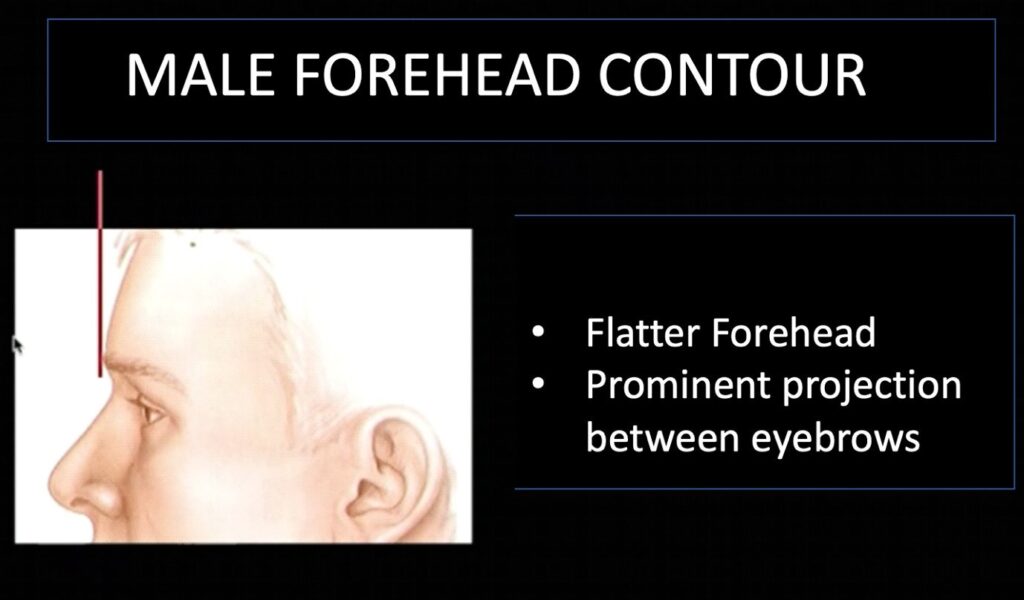
Forehead Filler for Softening the Brow Ridge
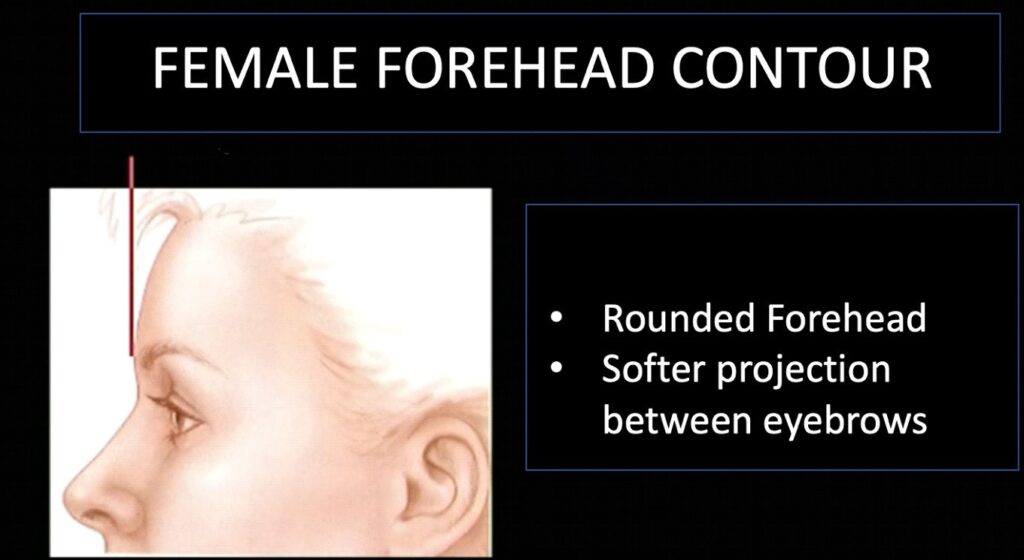
Where the goal is a softer upper face, filler is placed above and around the supraorbital ridge to smooth the transition between brow and forehead. The ridge itself is not reduced, since that requires surgery. What changes is the contour running across it, so the shelf reads as a curve rather than an edge.
This is a common request in facial feminization, and it is also requested by patients with no interest in feminization who simply feel their brow has become heavy with age. The technique is the same. The amount and the endpoint differ.

Treating a Flat or Concave Forehead With Filler
Where the forehead has flattened or hollowed with age, filler restores projection across the frontal region and rebuilds the gentle convexity that was lost. Because this is structural work across a broad surface, it typically requires more product than patients expect, and attempting it with too little produces a change nobody can see.
Placement here is deep, against the bone, using cannula technique where appropriate. That is partly an aesthetic decision, since superficial product in a thin-skinned region shows, and partly a safety one, described below.
Combining Forehead Filler With Neurotox®
Filler restores shape. It does not soften the horizontal lines produced by the forehead muscle contracting. Where both are concerns, a neuromodulator is used alongside filler to reduce the muscle activity creating the lines, while the filler addresses the underlying contour.
The two are frequently staged rather than performed together, since it is easier to judge how much volume a forehead needs once the muscle activity has settled.

What to Expect From Forehead Contouring in Beverly Hills
Treatment takes roughly thirty to forty-five minutes. Results are visible immediately, with swelling over one to two days and the final contour settling at about two weeks. Bruising is possible and is more visible in this region than in areas covered by hair or shadow.
Filler placed in the forehead is long lasting, generally one to two years, since the area is comparatively static.
Forehead Filler Risks and Safety
This section matters more here than on most pages. The forehead and glabella, meaning the area between the eyebrows, carry the highest risk of vision loss of any facial injection site. The arteries supplying this region connect to the ophthalmic circulation, and filler that enters one of them can travel backward toward the retinal artery. Vision loss from filler is rare, and when it occurs it is most often associated with this region and with the nose.
What reduces that risk is anatomical knowledge, deep placement against bone, cannula technique where appropriate, small volumes delivered slowly with low pressure, aspiration where indicated, and a physician who can recognize and begin treating a vascular event within minutes rather than referring you elsewhere.
More common effects include swelling, bruising, tenderness, temporary lumpiness, and asymmetry, most of which resolve or are correctable at follow up. Product placed too superficially in this thin-skinned area can be visible as a ridge or produce a bluish cast, and both are correctable with hyaluronidase.
Individual results vary and no outcome can be guaranteed.
Why Patients Choose Beverly Hills Aesthetics for Forehead Contouring
- Anatomical Precision: Technique built around the vascular anatomy that makes this the least forgiving region on the face.
- Physician Performed: Dr. Assassa injects the forehead and glabella himself.
- Deep Placement Technique: Product placed against bone rather than superficially, which is both safer and less visible.
- Goal Led Planning: Whether a brow ridge is softened or preserved is asked rather than assumed.
- Teaching Level Experience: Injectable anatomy taught to practicing physicians internationally.
Frequently Asked Questions About Forehead Filler
It is a medical procedure with a real and specific risk, and it is safe in proportion to who performs it and how. The forehead and the area between the brows sit closer to the ophthalmic circulation than any other injection site on the face, which means vascular complications here can affect vision. Those events are rare. They are made rarer by deep placement against bone, small slow volumes, cannula technique where appropriate, and an injector who knows the anatomy well enough to recognize a problem immediately. This is not an area to choose on price or convenience.
Not by itself, because filler and wrinkles are different problems. Horizontal forehead lines come from the muscle contracting, and softening them requires a neuromodulator rather than volume. Filler restores the shape and projection of the forehead, which improves how light falls across it and can make lines look less pronounced, but the lines themselves are muscular. Most patients treating both use the two together, often staged across appointments.
More than most people expect, because this is structural work across a large surface rather than a targeted correction. A forehead that has flattened noticeably may need several syringes to produce visible change, while softening a brow ridge can require considerably less. Treating a forehead with a single syringe usually produces a result nobody notices, which is money spent for nothing. Dr. Assassa will tell you what your forehead actually requires at consultation.
No, and the distinction is worth being clear about. Surgical forehead contouring reshapes the bone itself, reducing a prominent brow ridge permanently. Filler works by adding volume around the ridge to change the contour running across it, which softens the appearance without altering the underlying structure. For patients wanting significant skeletal change, particularly in facial feminization, surgery achieves something filler cannot. For patients wanting softening without an operation, filler is a reasonable and reversible option.
Generally one to two years, which is at the longer end for facial filler. The forehead moves comparatively little compared with the mouth or the lips, and the dense structural products used for deep placement break down slowly. Patients frequently find that maintenance requires less product than the initial treatment, since a portion of the original placement is still doing work.
Cost depends on how much product your forehead requires and whether neuromodulator treatment is being combined with it, and structural forehead work sits toward the higher end because of the volume involved. Pricing is confirmed at your consultation and current figures are published on the fees page. Cosmetic treatment is generally not covered by insurance and several payment options are available.
Forehead Contouring Before and After
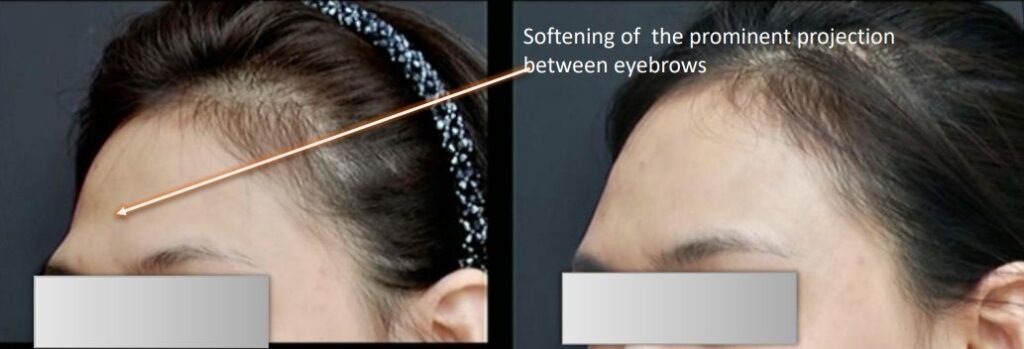
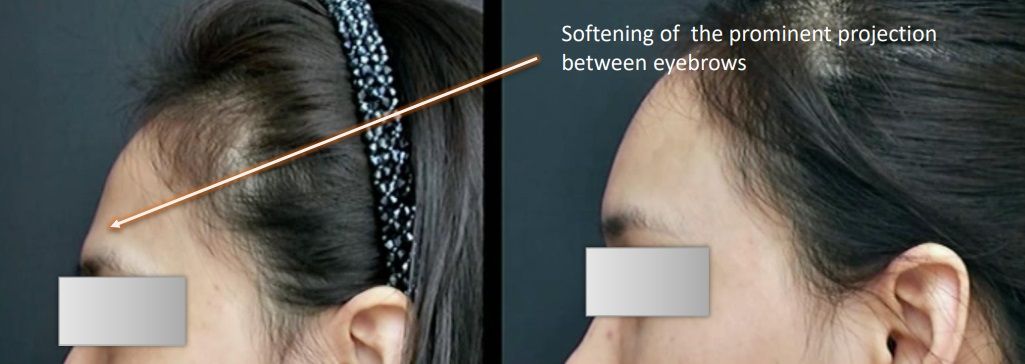
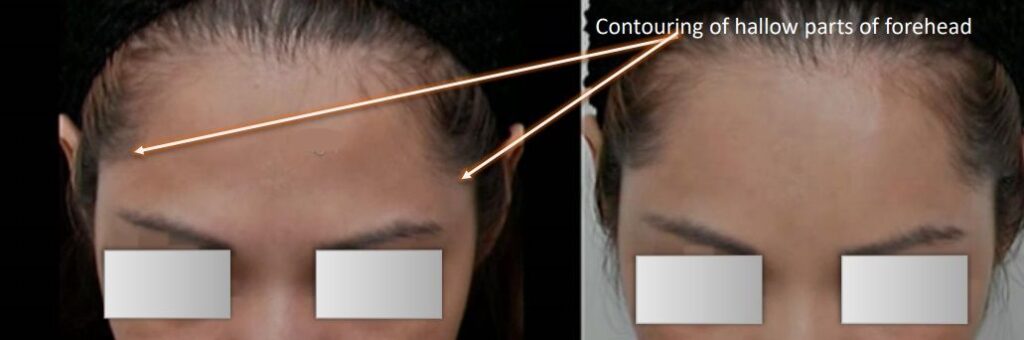
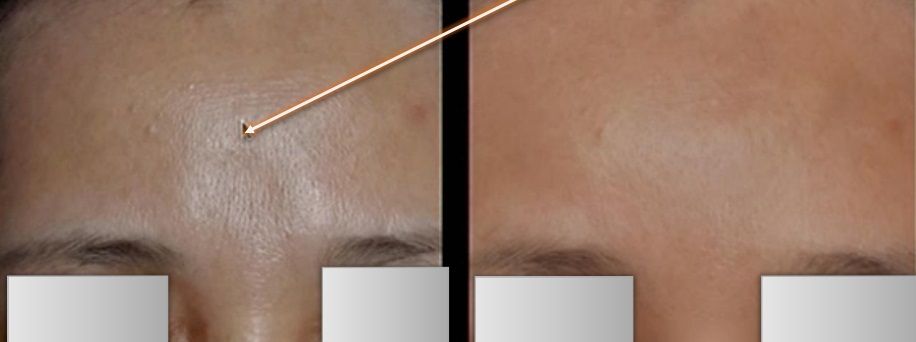
View Non-surgical Forehead Contouring Before & After Gallery
Schedule a Forehead Contouring Consultation in Beverly Hills
If your face reads harder or heavier than it used to, or your forehead has flattened in a way makeup and hairstyle no longer disguise, the upper third is worth having assessed properly. Dr. Assassa will evaluate your frontal contour, brow ridge, and soft tissue volume and tell you what filler can realistically change and what would require surgery. Beverly Hills Aesthetics serves patients from Beverly Hills, Los Angeles, West Hollywood, and Century City. Request a consultation or schedule your appointment online.
Medically reviewed by Sam Assassa, M.D. on