Every filler eventually leaves. That is the trade patients accept in exchange for reversibility and a short appointment, and for many it is the right trade. But patients who have been maintaining the same areas for years, or who have lost enough volume that filling it would take a considerable amount of product, often reach a point where using their own tissue makes better sense.
Fat transfer depends on two separate skills, harvesting the tissue without damaging it and placing it where it will survive, and Sam Assassa, MD has practiced both since founding Beverly Hills Aesthetics in 1995. He is board certified in Internal Medicine and a member of the American Society of Liposuction Surgery. Dr. Assassa is the Founder and President of the American Association of Aesthetic Medicine and Surgery since 2006.
“Fat is not a better filler. It is a different thing. Filler occupies space and leaves. Fat that takes becomes part of your face, and the part that does not take goes away. Patients need to understand both halves of that before they choose it.” — Sam Assassa, MD
How Facial Fat Transfer Works
Fat is harvested from an area where you have excess, most often the abdomen or thighs, under local anesthesia using small syringes. It is then processed to separate the usable tissue and injected into the areas of the face that have lost volume.
Because the tissue comes from your own body, there is no foreign material introduced and the likelihood of an allergic reaction is substantially reduced compared with synthetic product. The transferred fat that establishes a blood supply becomes living tissue in its new location rather than a substance that will gradually break down.
What Facial Fat Transfer Treats
- Midface Volume: Restoring fullness in the cheeks and the upper cheek where deflation begins.
- Temples: Rebuilding the hollowing at the sides of the forehead that narrows the upper face.
- Under Eye Hollows: Softening the transition between lower eyelid and cheek.
- Chin And Jawline: Adding projection and definition where structure has thinned.
- Perioral Region: Restoring volume around the mouth and softening the folds that deepen with age.
- Acne Scarring: Improving the appearance of pitted, depressed scars.
Fat Transfer Compared With Dermal Filler
Filler is reversible, requires no harvesting, involves a short appointment with minimal recovery, and generally lasts six to eighteen months depending on the product and placement. It is the right choice for patients treating a specific area, trying a change for the first time, or wanting the option to undo it.
Fat requires a harvest site, a longer appointment, and more recovery, and it is not reversible in the way hyaluronic acid is. What it offers is durability and volume at a scale that would require a large amount of filler, along with the use of your own tissue rather than a manufactured product.
A useful sequence for many patients is filler first, then fat. Filler lets you see a change on your own face and decide whether you like it before committing to something more durable, and Dr. Assassa frequently recommends it in that order.
How Long Fat Transfer Results Last
This is where honesty matters more than enthusiasm. Not all transferred fat survives. A portion establishes a blood supply in its new location and persists indefinitely, and a portion is reabsorbed by the body over the first several months. How much survives varies between patients and is influenced by technique, by the area treated, and by individual healing.
Results are therefore long lasting but should not be described as permanent, and the final result is judged at several months rather than at the appointment. Some patients require a second session to reach the volume they were after, and that possibility is discussed beforehand rather than presented as a complication afterward.
What to Expect After Facial Fat Transfer
Expect swelling and bruising at both the donor site and the face, generally more than after filler and typically settling over one to two weeks. The face will look fuller than the final result initially, which is expected, since swelling and reabsorption both resolve over the following months.
The donor site has a small access point that leaves a minor scar. Most patients take several days before returning to social activity.
Facial Fat Transfer Risks and Safety
Fat transfer is a minimally invasive procedure with a harvest component, and its risk profile reflects that. Expected effects include swelling, bruising, tenderness, and temporary firmness at both sites.
Risks include infection, bleeding, contour irregularity or lumpiness at either the donor or recipient site, asymmetry, prolonged swelling, and unpredictable graft survival requiring a second session. Cyst or nodule formation can occur where grafted fat does not survive. Rarely, fat injected into or compressing a blood vessel can restrict blood flow and damage tissue, and fat embolism, while very rare, is a recognized complication of fat injection.
The regenerative properties sometimes attributed to fat grafting, including effects on surrounding skin quality, are an area of ongoing research rather than a settled mechanism. Individual results vary and no outcome can be guaranteed.
Frequently Asked Questions About Facial Fat Transfer
Is facial fat transfer permanent?
Long lasting, but not permanent, and any page telling you otherwise is overselling. A portion of the transferred fat establishes a blood supply and stays indefinitely, while a portion is reabsorbed over the first several months. How much survives varies between patients, which is why the result is judged at several months rather than on the day, and why some patients elect a second session. The fat that does survive behaves like the rest of your facial tissue and continues to age with you.
Is fat transfer better than dermal filler?
Neither is better in the abstract. Filler is reversible, requires no harvest, and suits a targeted change or a first attempt. Fat suits patients who have been maintaining filler for years, who need volume at a scale that would take a lot of product, or who prefer their own tissue. Many patients use filler first specifically to see whether they like the change before committing to something durable, which is a sensible sequence rather than an indecisive one.
How much fat is needed for a facial fat transfer?
Considerably less than patients expect, typically a small volume harvested from the abdomen or thigh, which means even lean patients usually have enough. Dr. Assassa examines potential harvest sites at consultation. The limiting factor is far more often how much the face needs than how much is available.
Does fat transfer hurt?
The harvest is performed under local anesthesia and most patients describe pressure rather than pain during the procedure. Afterward is a different matter than filler, with soreness at the donor site, more swelling than an injectable appointment produces, and bruising that is common at both sites. Most patients plan several days before returning to social activity.
Can fat transfer be reversed if I do not like it?
Not the way hyaluronic acid filler can, and this is the most significant trade-off in choosing it. There is no enzyme that dissolves grafted fat, so correction relies on time, on the natural reabsorption of some of the graft, or in some cases on other interventions. That irreversibility is the main argument for trialing the change with filler first, and for conservative placement rather than treating to the maximum in one session.
How much does facial fat transfer cost in Beverly Hills?
Cost depends on how many areas are treated and whether a second session is anticipated, and fat transfer costs more upfront than filler while lasting considerably longer, which changes the arithmetic for patients planning over years. Pricing is confirmed at consultation and current figures are published on the fees page. Cosmetic treatment is generally not covered by insurance and several payment options are available.
The Process
Non Surgical Facelift Fat Transfer
Consult
30 Minutes
Price
$4000-$5000
Treatment
2 Hours
Downtime
Varies: 3-5 days swelling or bruising
Results
Immediate
Duration
Several Years
The Process Non Surgical Facelift Fat Transfer
Consult
30 Minutes
Price
$4000-$5000
Treatment
2 Hours
Downtime
Varies: 3-5 days swelling or bruising
Results
Immediate
Duration
Several Years
Why Patients Choose Beverly Hills Aesthetics for Fat Transfer
- Harvesting And Placement: Both halves of the procedure performed by the same physician.
- Three Decades Of Liposuction Practice: Harvesting technique built on the same skill set.
- Honest Durability Language: Results described as long lasting rather than permanent.
- Filler First Where Sensible: Reversible treatment offered to trial a change before committing.
- Conservative Placement: Volume built across sessions where needed, since fat cannot be dissolved.
Schedule a Facial Fat Transfer Consultation in Beverly Hills
If you have been maintaining filler in the same areas for years, or your face has deflated enough that replacing it would take a considerable amount of product, fat transfer is worth discussing. Dr. Assassa will assess how much volume you have lost and where, and tell you honestly whether fat or filler suits your situation better. Beverly Hills Aesthetics serves patients from Beverly Hills, Los Angeles, West Hollywood, and Century City. Request a consultation or schedule your appointment online.
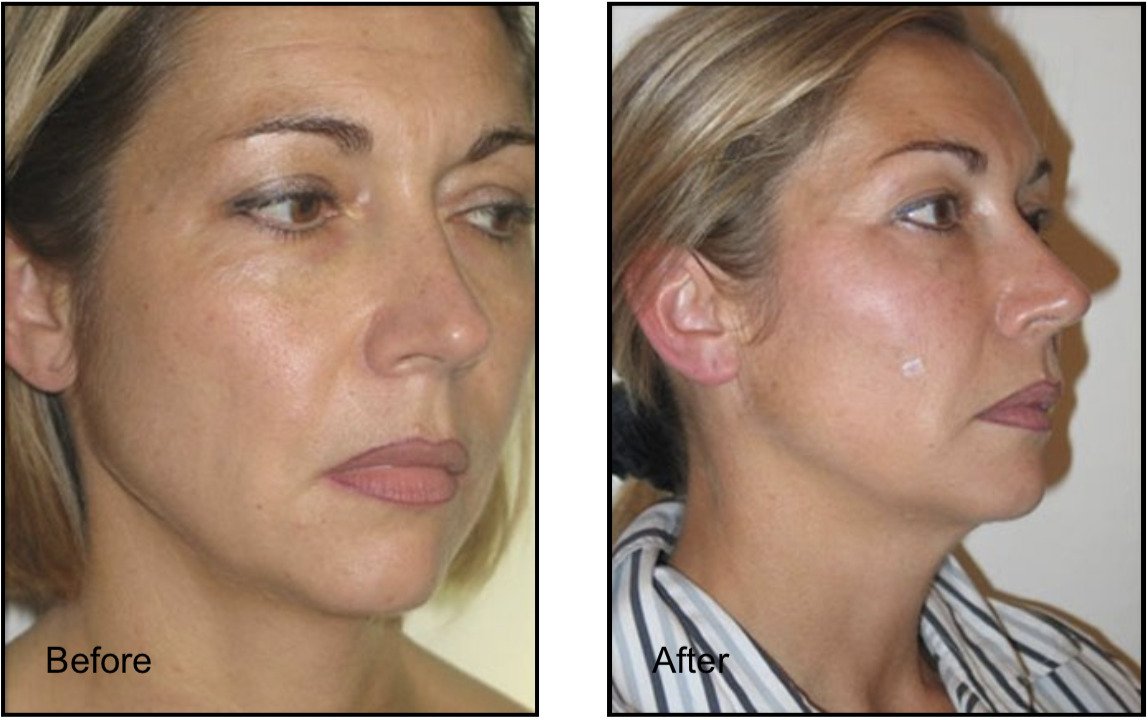
BEFORE & AFTER
For more information or to find out the right option for you, call Beverly Hills Aesthetics at 424-284-8933 Or Request a Complimentary Consultation with Dr. Assassa. We look forward to meeting you.