The reason acne scar treatment disappoints people is almost always that the treatment did not match the scar. Acne produces several distinct kinds of scarring, they respond to entirely different interventions, and most patients have more than one type on the same face. A single treatment applied across all of them improves some and does nothing for others, which is the experience most people describe when they say nothing worked.
Sam Assassa, MD received his medical degree with honors, completed his internship at Loyola University affiliated hospitals in Chicago and his residency at Case Western Reserve University affiliated hospitals in Cleveland, and is board certified in Internal Medicine. He founded Beverly Hills Aesthetics in 1995 and has performed more than 25,000 aesthetic procedures.
“There is no acne scar treatment. There are four or five of them, and the work is figuring out which scars you actually have before choosing anything.” — Sam Assassa, MD
The Types of Acne Scars and What Each One Needs
This is the part that determines everything else.
Ice pick scars are narrow, deep, and steep sided, like a puncture. They extend well into the dermis and are the hardest type to treat, because resurfacing the surface does not reach the base. They generally need a focal approach rather than a broad one.
Boxcar scars are wider with defined edges and a flat base, like a small crater. They respond to resurfacing and microneedling, which soften the edges and raise the base, and to filler where the depression is deep.
Rolling scars are broad and shallow with sloping edges, giving the skin an undulating appearance. They are tethered from beneath by fibrous bands, which is why surface treatment alone underperforms on them. Releasing the tether is the key step, which is what subcision does.
Hypertrophic and keloid scars are raised rather than depressed, resulting from excess collagen. They are treated in the opposite direction, typically with steroid injection to flatten them, and they are more common on the chest, back, and jawline than on the cheeks.
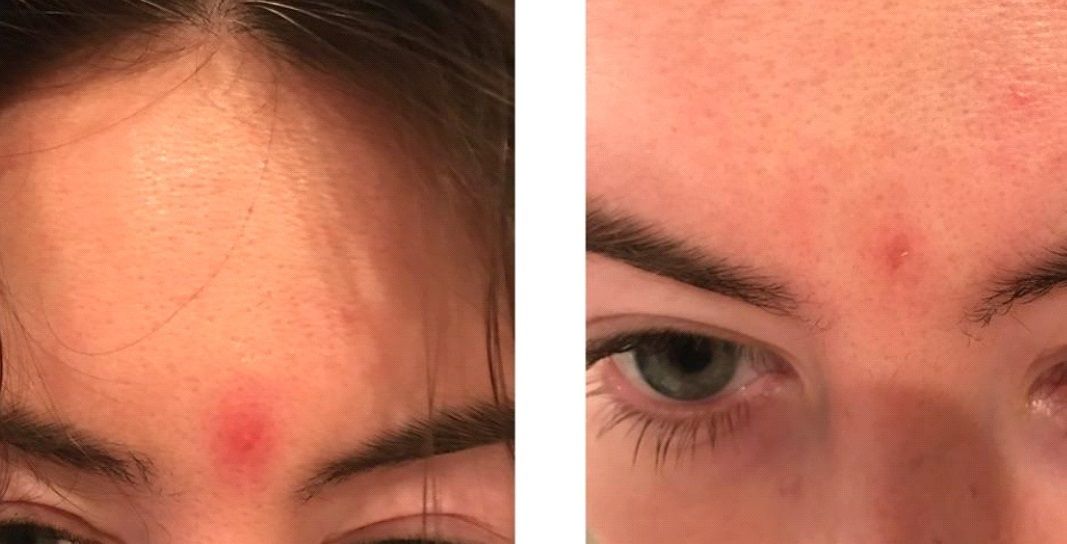
Post-inflammatory hyperpigmentation is not scarring at all. It is discoloration left behind after a lesion resolves, it has no textural component, and it fades on its own over months, faster with topical treatment. Patients frequently seek scar treatment for what is actually pigmentation, and the distinction is made at consultation.
Subcision for Tethered and Rolling Scars
Where scars are pulled down from beneath by fibrous bands, releasing those bands is what allows the surface to rise. A needle or cannula is passed beneath the scar and moved to divide the tethering tissue, after which the skin elevates and healing beneath it maintains the correction.
Subcision is frequently combined with resurfacing or microneedling in the same treatment plan, since releasing the tether and improving the surface address different aspects of the same scar. It is covered in detail on the subcision page.
Resurfacing and Microneedling for Texture and Edges
Fractional CO2 laser resurfacing removes damaged tissue and prompts the skin to rebuild, softening scar edges and improving the surrounding texture. It produces the most improvement per session and requires five to seven days of recovery.
Microneedling stimulates the same collagen response without removing tissue, producing less per session across a series with minimal downtime and a lower risk of pigmentary change. For many patients with medium and deeper skin tones, that lower risk makes it the more appropriate choice.
Fillers and Fat for Depressed Scars
Where a scar is a depression that has been released but has not fully risen, adding volume beneath it lifts the surface. Dermal filler does this immediately and temporarily. Fat grafting and nanofat do it with your own tissue, with a portion of the graft persisting long term.
This is generally a finishing step rather than a starting one, applied after tethering has been released and surface texture has been addressed.
Steroid Injection for Raised Scars
Hypertrophic and keloid scars are the opposite problem, too much collagen rather than too little. A dilute corticosteroid injected directly into the scar reduces its bulk and flattens it over a series of treatments. Injections are spaced deliberately, since repeated corticosteroid exposure affects the surrounding tissue.
What to Expect From Acne Scar Treatment
Meaningful improvement in significant scarring takes a plan and several months, not one appointment. Most patients receive a combination, sequenced so that tethering is released first, surface texture is addressed next, and residual depressions are filled last.
Realistic expectation setting matters here more than in most of aesthetic medicine. Substantial improvement is achievable. Complete erasure generally is not, and any practice promising it is not being straight with you.
Acne Scar Treatment Risks and Safety
Risks depend on which treatments the plan includes and are described in full on each procedure page. Across all of them, the concern most relevant to acne scarring is post-inflammatory hyperpigmentation, since patients prone to acne scarring are frequently also prone to pigmentary change, and it is more likely in deeper skin tones. That risk shapes which treatments are recommended and at what intensity.
Treatment is generally deferred while acne is still active, since scarring a moving target produces poor results and treating over active lesions can worsen them. Controlling the acne comes first.
Individual results vary and no outcome can be guaranteed.
Frequently Asked Questions About Acne Scar Treatment
Can acne scars be removed completely?
Substantially improved, yes. Completely erased, generally no, and it is worth hearing that before you spend anything. Scarring is a structural change to the dermis, and treatment reduces its depth and softens its edges rather than restoring the original tissue. Most patients with a well matched plan see improvement that makes their scarring far less noticeable, particularly in normal lighting. Anyone promising complete removal is overselling.
Which treatment is best for my acne scars?
It depends entirely on which types you have, and most people have more than one. Rolling scars need the tethering released with subcision. Boxcar scars respond to resurfacing and microneedling. Ice pick scars are the most resistant and need a focal approach. Raised scars need the opposite treatment, usually steroid injection. This is why an examination comes before a recommendation, and why a single treatment applied across a whole face disappoints people.
Should I treat my acne before treating the scars?
Yes, and this is the most common sequencing mistake. Treating scars while acne is still active means working on a face that is still producing new lesions, so new scarring forms while old scarring is being treated. Some treatments can also worsen active acne by spreading bacteria. Getting the acne under control first is not a delay tactic, it is what makes the scar treatment worth paying for.
How long does acne scar treatment take?
Months rather than weeks for meaningful scarring. A typical plan involves several sessions spaced four to six weeks apart, often combining treatments, with results continuing to develop for months after the last one as collagen remodels. Patients hoping to resolve significant scarring before an event a few weeks away should adjust the timeline or the expectation.
Are acne scar treatments safe for darker skin?
Yes, with appropriate selection, and skin type genuinely changes the recommendation. Post-inflammatory hyperpigmentation is more likely in deeper skin tones, so ablative resurfacing carries more risk and microneedling and subcision are often favored, sometimes with a pre-treatment regimen to reduce pigmentary response. This is discussed directly at consultation rather than treated as an afterthought.
How much does acne scar treatment cost in Beverly Hills?
Cost varies widely because plans do, and a patient needing a single modality differs greatly from one needing subcision, resurfacing, and filler across several sessions. Pricing is confirmed at consultation once your scar types are assessed and a plan exists. Current figures are published on the fees page, and several payment options are available.
Why Patients Choose Beverly Hills Aesthetics for Acne Scars
- Scar Type Assessment: Ice pick, boxcar, rolling, and raised scars identified before treatment is chosen.
- Combination Planning: Tethering, texture, and depth addressed in sequence rather than with one modality.
- Full Range Available: Subcision, resurfacing, microneedling, fillers, fat, and steroid injection under one roof.
- Skin Type Considered: Pigmentation risk shaping the recommendation, not discovered afterward.
- Honest Expectations: Improvement described accurately rather than promised as erasure.
Schedule an Acne Scar Consultation in Beverly Hills
If you have tried treatments that did not work, the reason may be that they were aimed at the wrong kind of scar. Dr. Assassa will examine what you actually have, which is usually more than one type, and build a plan in the order that makes each step effective. Beverly Hills Aesthetics serves patients from Beverly Hills, Los Angeles, West Hollywood, and Century City. Request a consultation or schedule your appointment online.
SUBCISION
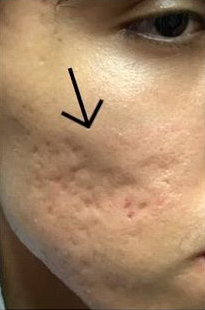
ACNE Scars Before Treatment
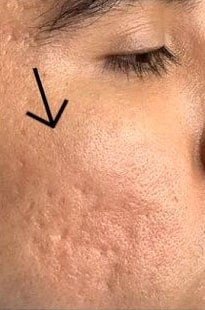
ACNE Scars After Subcision
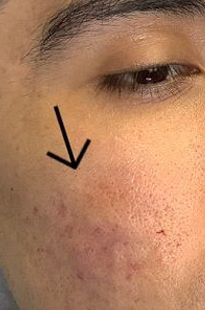
ACNE Scars After Subcision and Radiesse Filler
NANOFAT
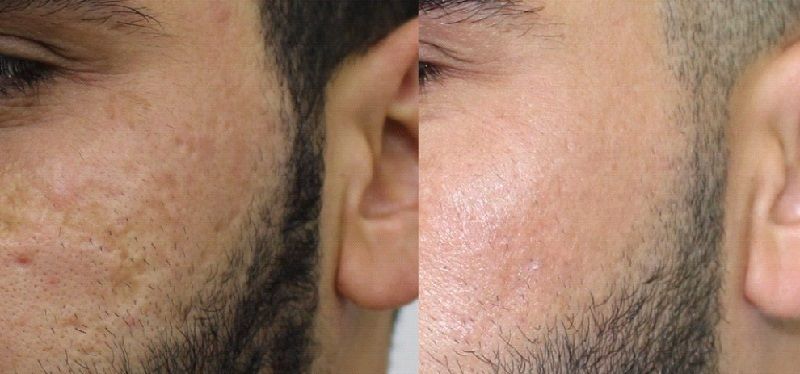
STEROID INJECTION:
For more information or to find out the right option for you, call Beverly Hills Aesthetics at 424-284-8933 Or Request a Complimentary Consultation with Dr. Assassa. We look forward to meeting you.