A brow that has dropped changes what your face communicates before you say anything. Patients describe being asked repeatedly whether they are tired or upset when they feel neither, and the cause is usually a few millimeters of brow position rather than anything they can point to. The eyebrow also falls unevenly, descending more at the outer end than near the nose, which is why the change reads as heaviness over the outer eye specifically.
Sam Assassa, MD is a member of the American Society for Laser Medicine and Surgery and has worked with both injectable and energy based technique across three decades of practice in Los Angeles. He founded Beverly Hills Aesthetics in 1995, is board certified in Internal Medicine, and has served as Founder and President of the American Association of Aesthetic Medicine and Surgery since 2006.
“A brow lift with a neuromodulator is a balance of muscles. I am not lifting the brow so much as releasing what is pulling it down, then letting the forehead do work it was already doing.” — Sam Assassa, MD
What Causes the Brow to Drop
Two forces work against brow position over time. The first is loss of structural support, as collagen declines, skin loses elasticity, and volume in the temple and outer brow diminishes, removing the scaffolding the brow was resting on.
The second is muscular. Several muscles pull the brow downward, including the ones between the brows and the ring of muscle around the eye. The forehead muscle pulls upward against them. Brow position is the result of that tug of war, and as the depressor muscles stay strong while support underneath is lost, the balance shifts downward.
A dropped brow crowds the upper eyelid, which is why patients often believe their eyelid is the problem. In more advanced cases the descent can encroach on the upper visual field, which is a functional concern rather than a cosmetic one and warrants an evaluation for surgery rather than injection.
How a Neurotox® Brow Lift Works
Selective placement of a neuromodulator relaxes the muscles pulling the brow downward while leaving the forehead muscle active. With the opposing force reduced, the forehead lifts the brow into a slightly higher position without any additional treatment.
The technique depends on which muscles are relaxed and which are deliberately left alone. Treating the forehead broadly, which is a common approach to forehead lines, can drop the brow rather than lift it, because the muscle doing the lifting is the one being relaxed. This is the most common reason patients report a heavy brow after neuromodulator treatment elsewhere.
The amount of lift achievable varies with age and with how much tone remains in the muscles left active. Effects develop over several days, reach full expression at about two weeks, and last roughly three to four months.
Please note: brow elevation is an off label application of these products. They carry FDA approval for specific indications including frown lines between the brows, and brow lifting is a related but separate use. Off label prescribing is legal and standard in aesthetic practice, and it is discussed at your consultation.
Brow Lift With Dermal Filler
Where the brow has dropped because support beneath it was lost, filler rebuilds that support directly. Product placed in the temple, along the brow bone, or in the outer brow restores volume and lifts the tissue resting on it, which also softens the hollowing at the temple that frequently accompanies a descending brow.
Filler and neuromodulator are often combined, since they address different halves of the same problem. One rebuilds the structure, the other rebalances the muscles. Results generally last six to eighteen months depending on the product and placement.
Brow Lift With Fat Transfer
Fat harvested from elsewhere on your body can be processed and placed in the temple and brow in the same way filler is. A portion of transferred fat establishes a blood supply and persists long term, though graft retention is partial and varies between patients, which means a second session is sometimes needed to reach the intended result.
Fat transfer suits patients who prefer their own tissue to synthetic product and who want a more durable correction. It is a more involved procedure than an injectable appointment, with a harvest site and a longer recovery, and those trade-offs are discussed in full at consultation.
Viora VST Skin Tightening for the Brow
Radiofrequency energy heats the deeper layers of the skin to stimulate collagen production, gradually firming the forehead and brow area. It does not produce the immediate change an injectable does, and it is not a substitute for one. It works on skin quality and mild laxity across a series of sessions, and it suits patients whose concern is texture and firmness as much as position.
Who Is a Candidate for a Non-Surgical Brow Lift
Non-surgical treatment works best for mild to moderate brow descent in patients with reasonable skin quality. It is genuinely effective within that range and it is not a replacement for surgery outside it.
Patients with significant brow descent, substantial excess upper eyelid skin, or brow position affecting the visual field will get a more meaningful and far longer lasting result from a surgical brow lift or blepharoplasty. Injectable treatment in those cases produces a change that is real but modest, and if that is your anatomy you should hear it before you spend anything.
What to Expect From a Brow Lift in Beverly Hills
Injectable treatment takes fifteen to thirty minutes. Neuromodulator results appear gradually over three to seven days and settle at about two weeks, while filler and fat results are visible immediately with swelling settling over one to two days. Radiofrequency requires a series of sessions with results developing across weeks as collagen remodels.
Most patients return to normal activity the same day. Bruising is possible with any injectable treatment around the eye, and mild swelling is common.
Non-Surgical Brow Lift Risks and Safety
Injectable treatment near the brow commonly produces bruising, swelling, and tenderness. The complication specific to this area is eyelid or brow ptosis, meaning a temporary droop caused by product affecting a muscle that was not the target. It resolves as the effect wears off, generally over several weeks, but it is the reason placement around the brow calls for precision rather than a standard pattern.
Asymmetry can occur and is often correctable with a small adjustment at follow up. Rarely, filler injected into or compressing a blood vessel can restrict blood flow, and the vessels in this region connect toward the ocular circulation. Radiofrequency treatment carries a risk of burns and pigment change when settings are not matched to the skin being treated.
Individual results vary and no outcome can be guaranteed.
Frequently Asked Questions About Non-Surgical Brow Lifts
How much lift can a non-surgical brow lift actually give me?
Typically a few millimeters, which sounds negligible and is not, because brow position operates on a small scale and a small change reads clearly on the face. The realistic outcome is an opened, more rested look rather than a dramatic elevation. Patients hoping for the magnitude of a surgical brow lift will be disappointed by injections, and anyone promising that from a syringe is overselling it.
Can neuromodulator injections make my brow droop instead?
Yes, and it is the most common way this treatment goes wrong. The forehead muscle is the one lifting your brow, so relaxing it broadly to smooth forehead lines removes the lift and the brow settles lower. Avoiding that outcome is a matter of which muscles are treated and which are deliberately left active, which is why brow work is a placement problem rather than a dosing problem. If it does happen, it resolves as the product wears off.
How long does a non-surgical brow lift last?
It depends on the method. Neuromodulator lifts last roughly three to four months. Filler placed for structural support lasts six to eighteen months. Fat transfer is the most durable, with a portion of the graft persisting long term. Radiofrequency results build across a treatment series and are maintained with periodic sessions. Many patients combine methods, which means a maintenance schedule rather than a single expiration date.
Is a non-surgical brow lift better than surgery?
Neither is better in the abstract, and the honest answer depends on how far the brow has descended. For mild to moderate descent, injectable treatment produces a real improvement with no recovery and no anesthesia, and it is a sensible choice. For significant descent, heavy upper eyelid skin, or any effect on the visual field, surgery produces a substantially larger and longer lasting result, and injections will not close that gap.
Will a non-surgical brow lift freeze my face?
Not when the goal is brow position, because the treatment is deliberately selective rather than broad. The muscles relaxed are the ones pulling the brow down, and the forehead muscle producing your expressions is left working. The frozen look comes from treating large areas at high doses, which is a different approach to a different problem.
How much does a non-surgical brow lift cost in Beverly Hills?
Cost depends on which method or combination is used, and neuromodulator treatment, filler, fat transfer, and a radiofrequency series occupy different price ranges. Pricing is confirmed at your consultation and current figures are published on the fees page. Cosmetic treatment is generally not covered by insurance and several payment options are available.
Why Patients Choose Beverly Hills Aesthetics for Brow Lifting
- Selective Injection Technique: Depressor muscles treated while the lifting muscle is deliberately preserved.
- Physician Performed: Dr. Assassa evaluates and injects the periorbital area himself.
- Four Approaches Available: Neuromodulator, filler, fat transfer, and radiofrequency, matched to the cause.
- Honest Candidacy Assessment: Patients better served by surgery are told so at consultation.
- Combination Planning: Structural and muscular contributions addressed together rather than one at a time.
Schedule a Brow Lift Consultation in Beverly Hills
If people keep asking whether you are tired, or your upper eyelids feel crowded in a way that makeup no longer solves, brow position is worth having assessed properly. Dr. Assassa will evaluate how much of the change is muscular, how much is volume, and what each approach could realistically deliver in your case. Beverly Hills Aesthetics serves patients from Beverly Hills, Los Angeles, West Hollywood, and Century City. Request a consultation or schedule your appointment online.
BEFORE & AFTER
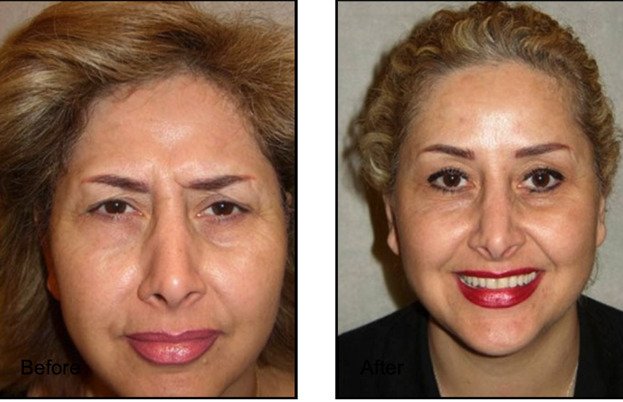
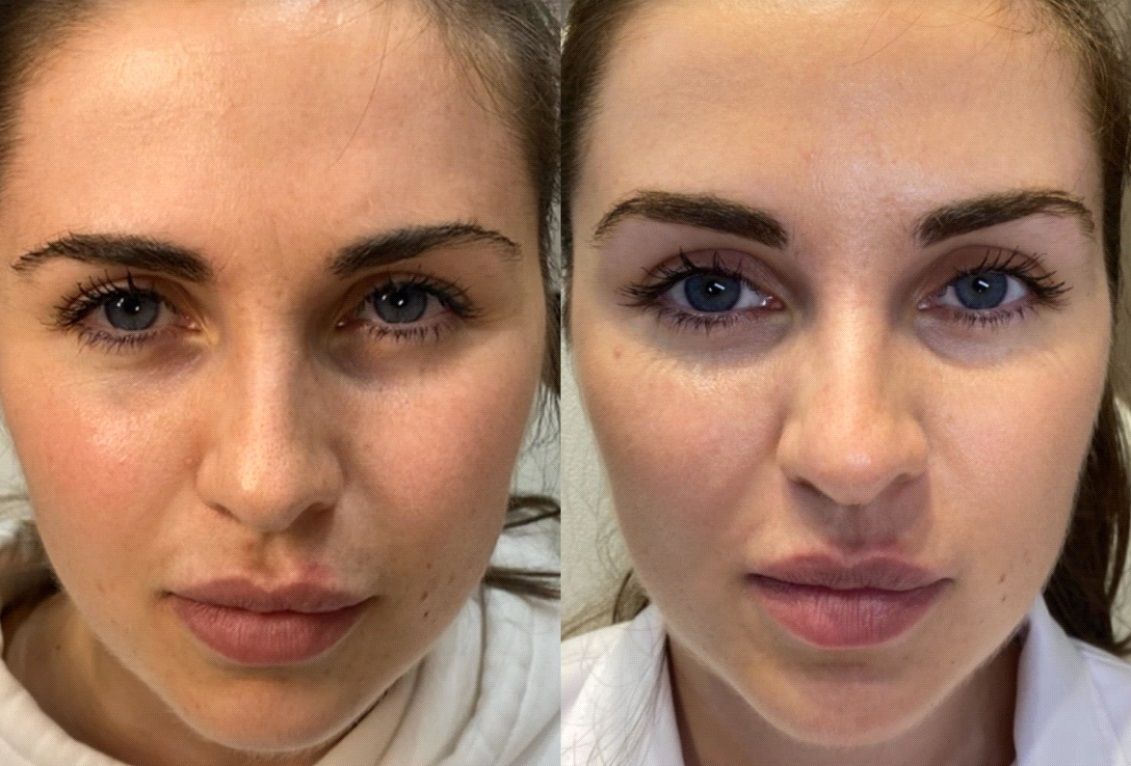
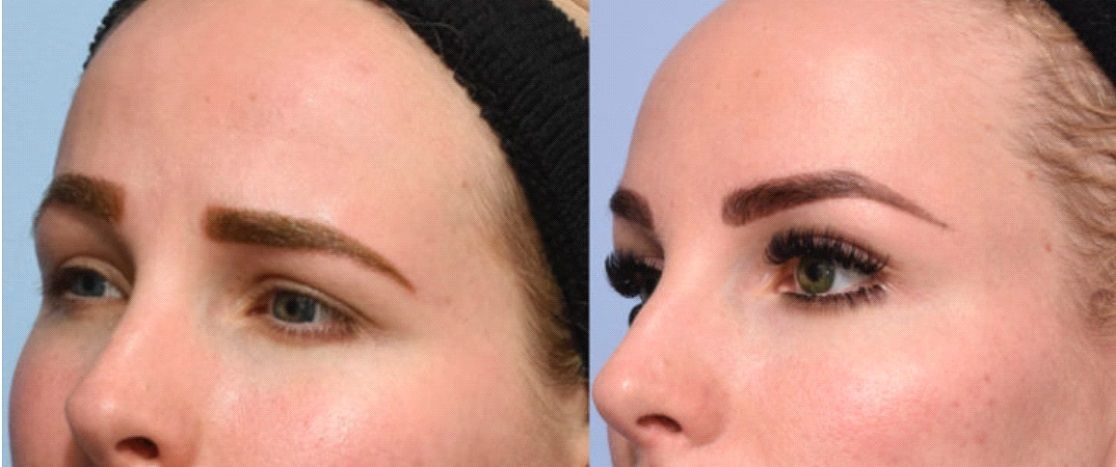
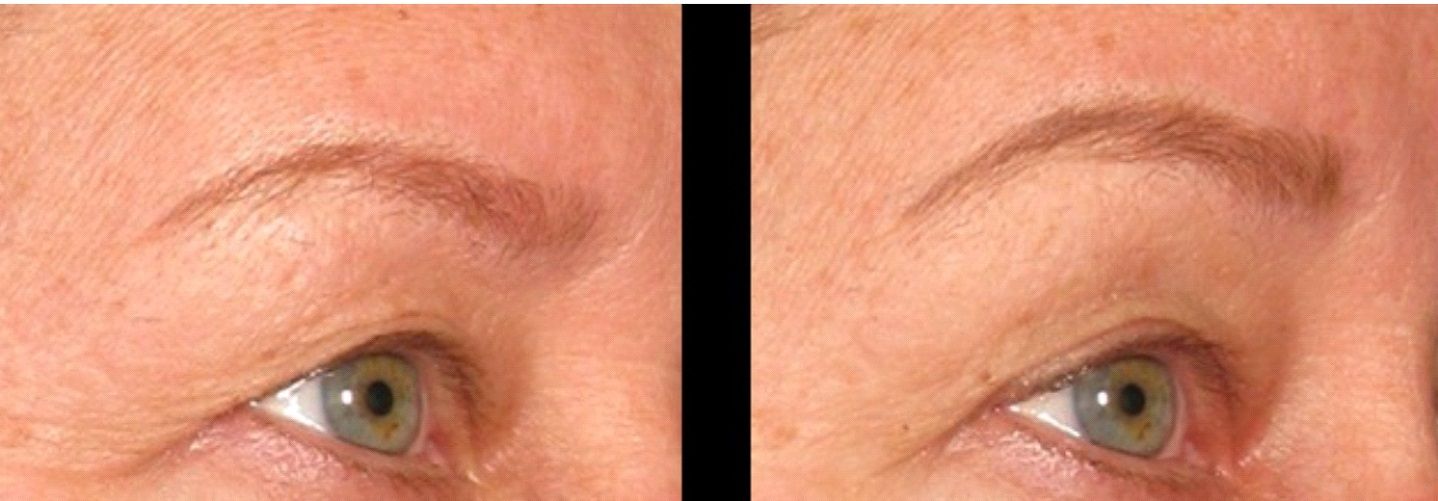
For more information or to find out the right option for you, call Beverly Hills Aesthetics at 424-284-8933 Or Request a Complimentary Consultation with Dr. Assassa. We look forward to meeting you.