
Nose Hump and Nasal Bumps
A bump on the bridge of the nose is one of the most commonly disliked features and one of the least understood. It measures a couple of millimeters and it changes how an entire profile reads, which is why people who dislike theirs have usually disliked it since adolescence and have never seriously considered surgery.
Sam Assassa, MD has performed non-surgical rhinoplasty for more than a decade and has treated over 2,000 patients with the technique. He founded Beverly Hills Aesthetics in 1995 and is board certified in Internal Medicine.
What Causes a Nose Hump
Genetics, in most cases. The dorsum of the nose is bone at the top and cartilage below it, and where those two meet a prominence can form. It typically becomes apparent during adolescent growth and it frequently runs in families.
Injury. A previous break can leave a callus or a displaced fragment that reads as a bump, sometimes years later.
Previous surgery. Irregularities, small depressions, and asymmetries after a rhinoplasty are common and are among the most rewarding things to correct non-surgically.
Age. The nasal tip descends slightly over decades, and as it drops the profile above it can appear more prominent even though nothing has grown.
Bump, Deviation, or Both
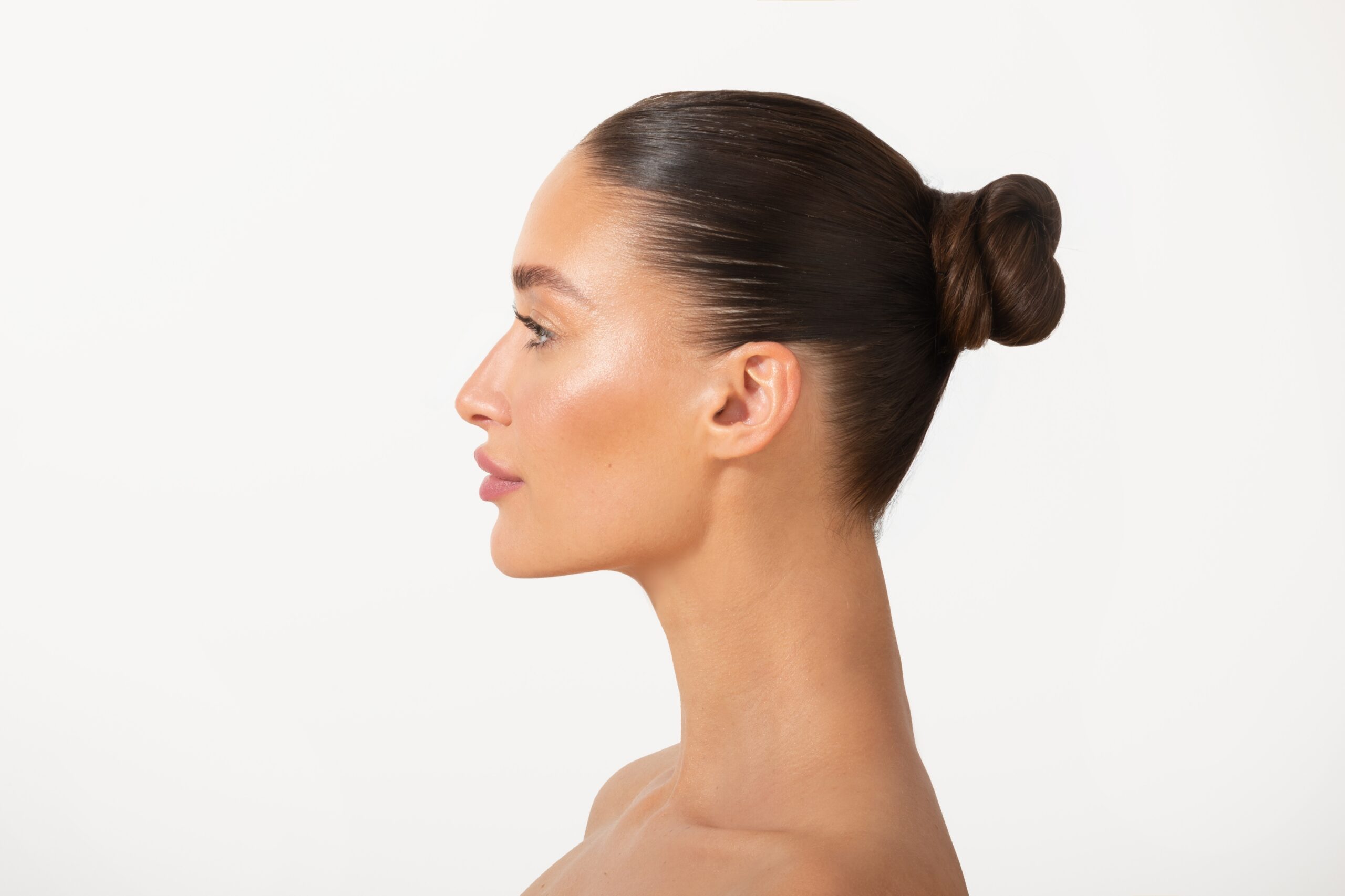
A dorsal hump is a prominence in the profile line, seen from the side.
A deviation is the nose sitting off centre or curving, seen from the front. This can be structural, from the septum, or cosmetic, from the external shape.
Irregularities are small dips, ridges, or asymmetries, most often after previous surgery or injury.
Filler addresses all three by adding volume, which is both the strength and the limitation of the technique.
How Filler Camouflages a Hump
This is the part that surprises people. Nothing is removed. Filler is placed above and below the bump, which straightens the profile line running across it, so light falls evenly and the hump stops reading as a bump.
The result is a straighter profile from a nose that is fractionally larger. In practice a straighter nose reads as more refined even at slightly greater volume, which is why the technique works despite sounding counterintuitive.
What it cannot do is make a nose smaller. It cannot narrow a wide nose, reduce overall size, or improve breathing. If reduction is your goal, surgical rhinoplasty is the appropriate procedure and you should hear that at the first visit rather than after treatment.
How Nose Concerns Are Treated
- Non-surgical rhinoplasty using filler to straighten the profile, lift the tip, and correct asymmetry, in about thirty minutes with results visible immediately.
- Botox® tip lift where the tip drops only when you smile, which is a muscle issue rather than a structural one.
- Chin enhancement, worth mentioning here because profile balance is relative and some patients unhappy with their nose get more improvement from chin projection.
- Surgical referral for size reduction, narrowing, or breathing concerns.
The nose carries the highest vascular risk of any filler site on the face, which is the reason this is not a treatment to choose on price.
Learn About Non-Surgical Nasal Hump Removal in Beverly Hills
Dr. Assassa will assess your nose in the context of your whole profile and tell you honestly whether filler will achieve what you are picturing. Request a consultation or schedule your appointment online.
Medically reviewed by Sam Assassa, M.D. on