Patients looking into liposuction in Beverly Hills are usually weighing two things at once, how much change they want and how much of their life they are willing to give up to get it. Minimally invasive technique sits between doing nothing and a full surgical procedure under general anesthesia, and for localized deposits it is frequently the right place to land.
Sam Assassa, MD is CEO and Medical Director of Pacific Lipo, with locations in Beverly Hills, Newport Beach, and San Diego, and was among the first physicians on the West Coast to introduce Smart Liposculpt™ for the face and body. He is board certified in Internal Medicine, founded Beverly Hills Aesthetics in 1995, and is a member of the American Society of Liposuction Surgery.
“Liposuction is not a device decision, it is a judgment decision. The technology helps. What determines your result is how much comes out, from where, and how it is blended into everything around it.” — Sam Assassa, MD
What Minimally Invasive Liposuction Involves
These techniques are performed in the office using tumescent local anesthesia, a dilute solution infiltrated into the treatment area that numbs the tissue and constricts small blood vessels. That is what allows the procedure to be done while you are awake, without general anesthesia, without a hospital, and without a surgical facility.
Fat is removed through a cannula introduced via a small incision. There is a compression garment afterward and a real recovery period, both of which are covered in detail on the individual procedure pages.
So the honest framing is that these are minimally invasive surgical procedures rather than treatments where nothing happens. What they avoid is general anesthesia, an operating room, and the recovery associated with conventional liposuction. That is a genuine and substantial difference, and it is worth understanding accurately before you decide.
Liposuction Techniques Available
Rather than applying one method to every patient, treatment is selected against the area, the fat distribution, and the skin quality involved.
Patients are encouraged to explore the following treatment areas in more detail:

SMART LASER LIPO
Laser assisted fat removal under local anesthesia, with some tightening of the skin above the treated area.
Read More about SMART LASER LIPO
ABDOMINAL LIPO
Localized fat across the upper and lower abdomen that has not responded to diet and exercise.
Read More about ABDOMINAL LIPO
LOVE HANDLES LIPO
The flanks in men and hips in women, a common site for stubborn deposits that resist exercise.
Read More about LOVE HANDLES LIPO
THIGHS LIPO
Inner and outer thigh contouring, where smooth transitions into surrounding areas matter most.
Read More about THIGHS LIPO
HIPS LIPO
The area below the flanks toward the upper outer buttock, which in most women transitions into the flank.
Read More about HIPS LIPO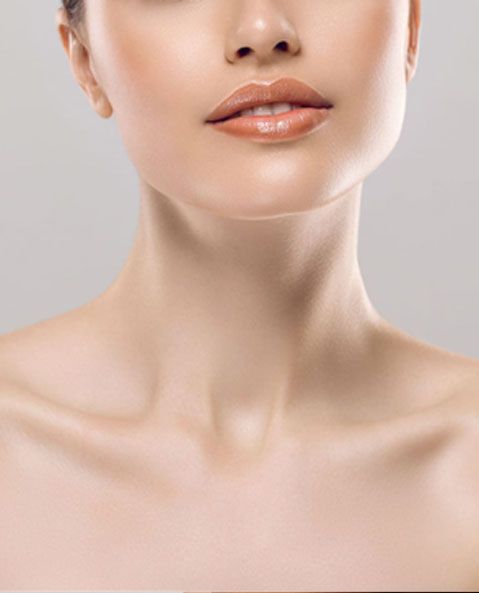
NECK "DOUBLE CHIN" LIPO
Submental fat that blurs the angle between chin and neck, where skin tightening is most useful.
Read More about NECK "DOUBLE CHIN" LIPO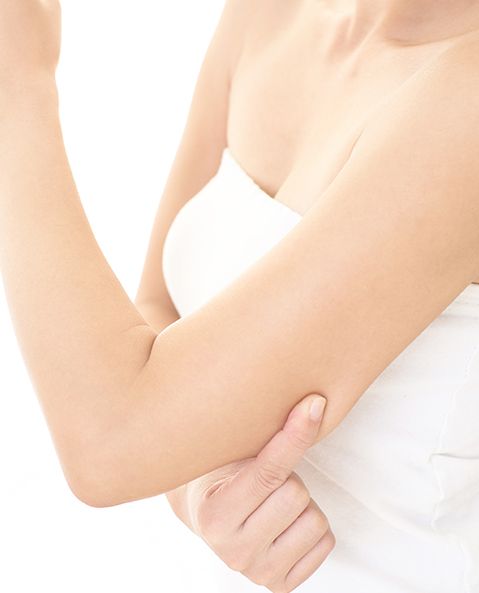
ARMS LIPO
Fullness across the back and upper arm that develops with age and loss of skin elasticity.
Read More about ARMS LIPO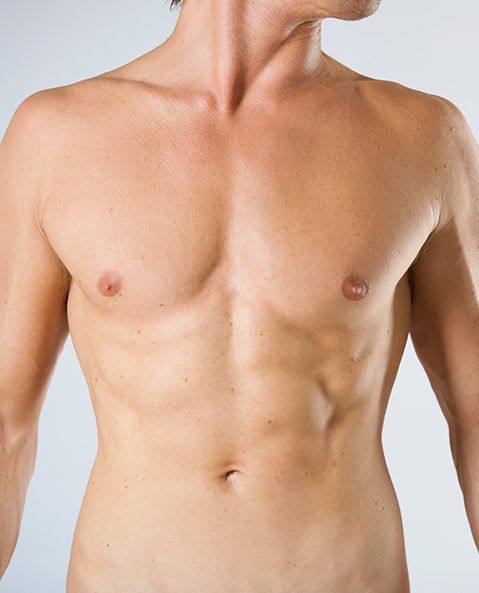
MALE BREAST LIPO
Fatty enlargement of the male chest, contoured while preserving skin and muscle.
Read More about MALE BREAST LIPO
BUFFALO HUMP LIPO
Fat accumulation between the shoulders at the base of the neck and upper back.
Read More about BUFFALO HUMP LIPO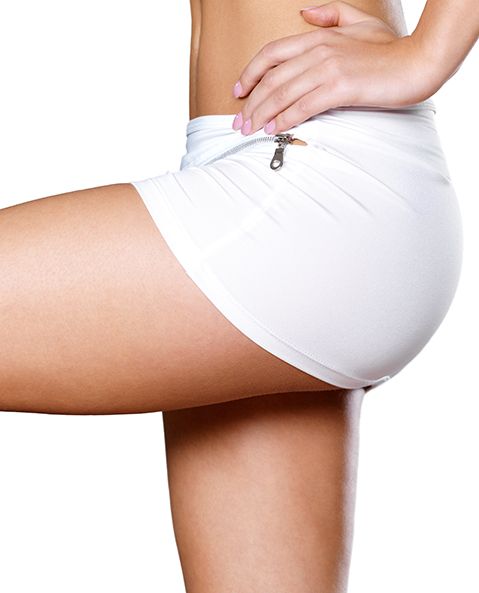
EZ LIPO
A modified tumescent liposculpting technique developed in France, used as an alternative to laser assisted and conventional approaches.
Read More about EZ LIPO
S.A.F.E LIPO
A powered technique that vibrates fatty tissue to break it into smaller pieces for removal, with reduced disruption to surrounding blood vessels.
Read More about S.A.F.E LIPOWhy Technique Matters More Than Technology
Liposuction, even in its minimally invasive forms, is highly technique dependent. How much fat is removed, from precisely where, and how the treated area is blended into everything around it determines the result far more than which device delivered the energy.
That is also where the most common complication comes from. Contour irregularity, rippling, and over-resection are judgment errors rather than equipment failures, and they are considerably harder to correct than to avoid. Published work on laser assisted liposuction specifically has noted that outcomes depend heavily on appropriate patient selection and on the operator’s broader body contouring experience.
Dr. Assassa’s background in this area includes membership in the American Society of Liposuction Surgery, early West Coast adoption of Smart Liposculpt™ for the face and body, and hundreds of hands-on training courses directed for physicians and nurses across more than 15 countries.
Who Is a Candidate
Good candidates are at or near a stable weight, in good general health, and want localized deposits addressed rather than overall size reduced.
Liposuction is not a weight loss procedure. It removes localized fat and improves contour. It does not meaningfully reduce body weight, does not treat obesity, and does not produce the metabolic benefits of actual weight loss. Patients seeking substantial reduction should address that first and treat contour once weight has stabilized.
Skin quality matters as much as fat volume. Removing fat from beneath skin that has lost elasticity can leave loosening where the volume used to be, and patients in that position sometimes need a procedure that addresses skin rather than only fat.
Frequently Asked Questions About Non-Surgical Liposuction
What does non-surgical liposuction actually mean?
The term is widely used and slightly imprecise, and it is worth being clear about. These are minimally invasive procedures performed in the office under tumescent local anesthesia, involving a small incision and a cannula, with a compression garment and a genuine recovery afterward. What they are not is surgery under general anesthesia in a hospital or surgical facility. That distinction is real and substantial, and it is different from the procedure being non-invasive.
How is this different from traditional liposuction?
The main differences are the anesthesia and the setting. Conventional liposuction is typically performed under general anesthesia in a surgical facility, allows larger volumes to be removed in one session, and involves a longer recovery. Minimally invasive technique is performed while you are awake, caps the volume treated in a session because of limits on local anesthetic, and recovers faster. Neither is better in the abstract. Larger volume goals point toward conventional technique, and localized contouring points here.
Is there really no downtime?
There is downtime, and any page telling you otherwise is setting you up to be unhappy. There is less of it than with conventional liposuction, but expect a compression garment, swelling and bruising for weeks rather than days, soreness, and temporary numbness. Most patients return to desk work within a few days and to exercise considerably later. The final contour settles over three to six months.
Are liposuction results permanent?
Fat cells that are removed do not return, so the improvement to the treated area is durable. What continues is your ability to gain weight, and remaining fat cells elsewhere and in the treated area can still enlarge. Patients who maintain a stable weight keep their result well. Patients who gain significantly will see change, and it can distribute differently than it did before, since the treated area now has fewer cells to expand.
How much fat can be removed at once?
Less than most people expect. Procedures under local anesthesia have a ceiling on how much tumescent solution can be used safely, which caps the volume treated in one session. This is contouring rather than large volume removal, and patients wanting several large areas addressed may need staged sessions or a different approach. That is discussed honestly at consultation rather than discovered partway through.
How do I choose between the techniques?
You generally do not, and that is the point of a consultation. The choice depends on the area, your fat distribution, your skin quality, and how much correction you are after, and the assessment produces the recommendation rather than the other way round. Many plans combine techniques across different areas of the same patient.
Schedule a Liposuction Consultation in Beverly Hills
If diet and exercise have taken you as far as they will and specific areas have not responded, a consultation will tell you which technique suits your anatomy and what a realistic result looks like. Dr. Assassa will assess your fat distribution and skin quality and give you an honest account of what one session can achieve. Beverly Hills Aesthetics serves patients from Beverly Hills, Los Angeles, West Hollywood, and Century City. Request a consultation or schedule your appointment online.